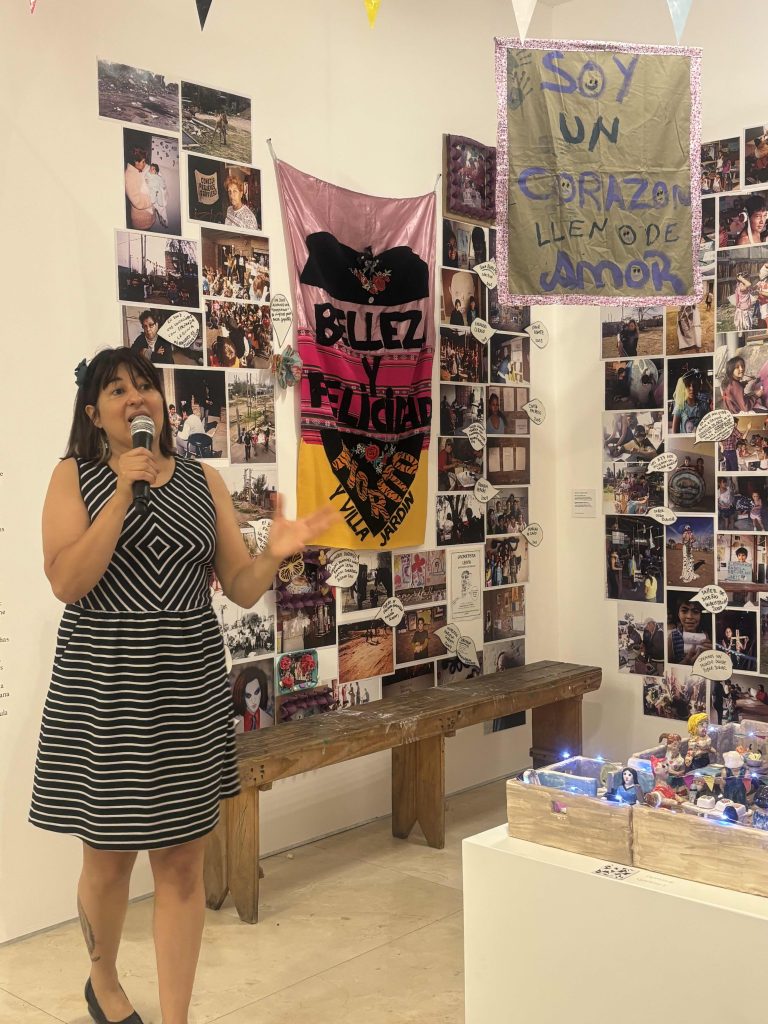
“I didn’t want to be creative. I didn’t want to create anything. I just wanted to follow the path of my desires. So I started using my imagination.”
Argentine artist, writer, and activist Fernanda Laguna spoke these words during the recent publication of an ambitious review of her work housed at the Museum of Latin American Art (MALBA) in Buenos Aires.
The exhibition, titled “My Heart is a Magnet (1992-2025),” is the first comprehensive overview of Laguna’s undisciplined practices, which have rippled through the local cultural landscape for three decades. Far from traditional art organizations, her work seamlessly blends contemporary art and the aesthetics of everyday life.
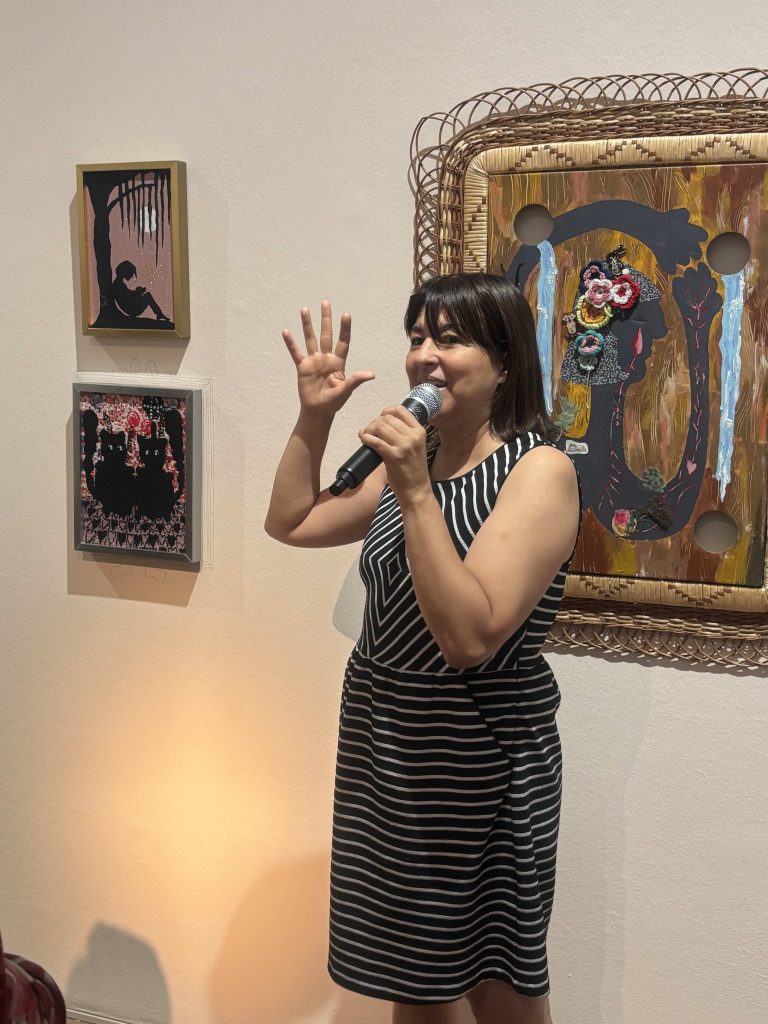
“This exhibition is dedicated to independent spaces and publishers, which are key to building culture,” Laguna explained.
“I wish museums could lend a hand to these independent spaces.”
Exhibits
The exhibition features more than 200 works divided into seven thematic sections. Works range from vibrant abstract paintings and delicate embroideries to sculptures, installations, and personal notebooks.
The show, curated by Miguel A. López, seeks to position Laguna not just as a creator of objects, but as a barometer of Argentina’s changing social and political trends since the early 1990s.
In the exhibition catalogue, he emphasized that the retrospective “presents a body of work that is at once unclassifiable and fascinating, popular and noble, which has become a touchstone of the Argentine art world of the past three decades.”
Lopez, who described the exhibit as “explosive” during his presentation, also said the title (“My Heart is a Magnet”) represents how the artist’s work “calls other minds, other bodies, to take action against society” in a “very complex” political time. In that context, such positive desires “become absolutely urgent,” he said.
The exhibition is a collaboration with Madrid’s Museo Nacional de Arte Reina Sofía and is scheduled to tour there in 2027.
1990s
Born in Hurlingham in 1972, Laguna first rose to prominence in the mid-1990s as a key figure in a generation associated with Centro Cultural Roxas, a cultural and artistic hub run by the University of Buenos Aires. The center ushered in a number of independent artists in the late 1990s and early 2000s.
Early solo exhibitions in 1994 and 1995, curated by Jorge Gumier Mayer, introduced a visual language that many critics initially dismissed as naive or superficial in terms of traditional political discourse.
By incorporating popular culture images of domesticity, craft traditions, cartoons, fairy tales, and decorative patterns, Laguna was in fact beginning a fundamental challenge to the rigid, patriarchal structures of the modern art world.
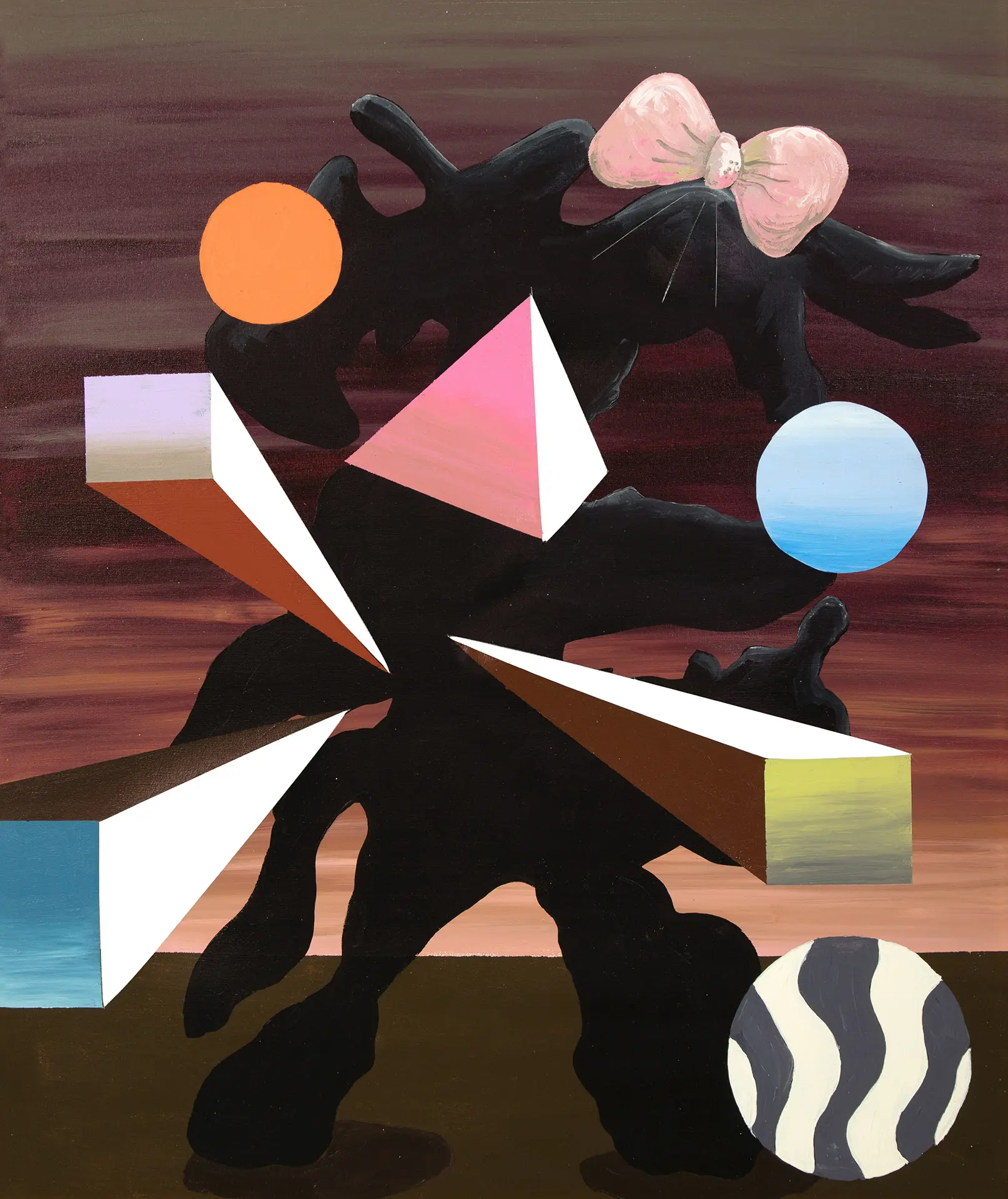
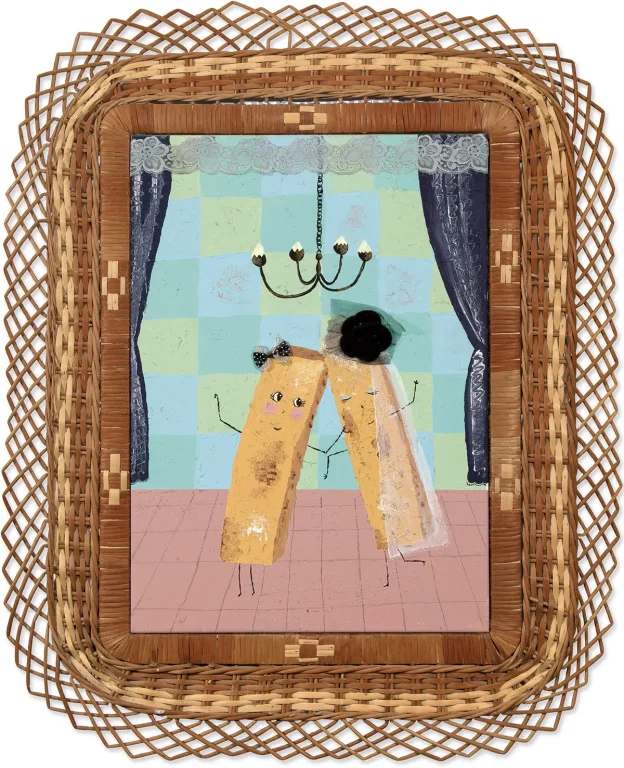
“When I presented my portfolio at LOHAS, Gumier Meyer said to someone, ‘I don’t know if this was painted by a completely crazy girl or by an old woman who is out of touch,'” Laguna recalled.
In the current retrospective at MALBA, visitors can trace early motifs that Laguna used to express the intensity of life, love, and the immediacy of the present moment, such as hearts with human features and cartoonish eyes.
Beauty and happiness in a troubled country
At the heart of the exhibition is Laguna’s role as a community builder, particularly through the founding of Belleza y Felicidad (Beauty and Happiness) in 1999.
The space, co-created with Cecilia Pavon, served as a gallery, gift shop, and independent publishing house at a time when there were few non-corporate spaces in the city.
After Argentina’s economic collapse in 2001, Beleza y Felicidad became an important center of emotional and political organization. They have hosted 226 exhibitions and hundreds of events, deliberately eschewing the formality of traditional organizations.
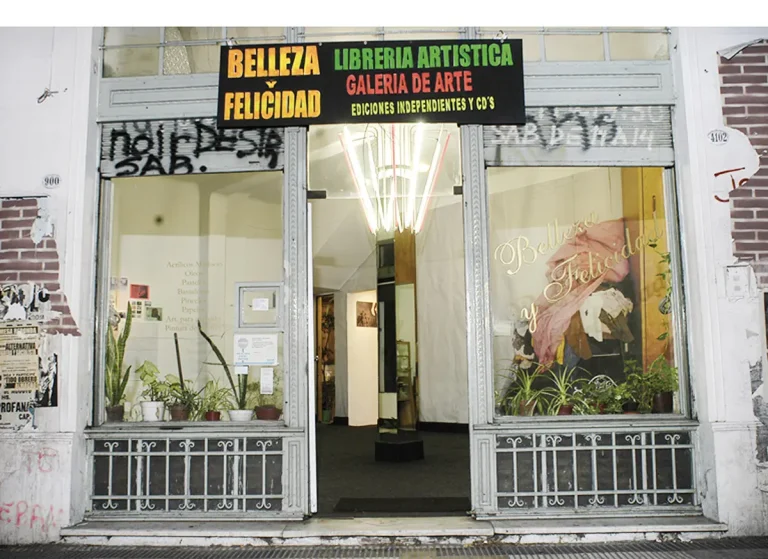
At the time, Laguna and Pavon were responding to the need for places that were “connected with the modern world.” In contrast to the museum-dominated scene, where the preparation and display process can take years, shows are easy to set up.
“By the time you submitted your portfolio and they said yes, you were already doing something different. So this was a place built out of instability, which later became an aesthetic,” she recalled.
The exhibition documents how this space fostered creative processes connected to social and popular mobilization, such as the work of Tor Popular de Serigraphia and the work sessions of Serigraphista Queer.
This spirit of collaboration extends to Villa Fiorito, the community where soccer legend Diego Maradona was born, and Laguna opened a branch in Beleza y Felicidad in 2003. The arts-related community project space focused on culture, work, and activity, and later included a gourmet soup kitchen.
Laguna’s literary work is similarly represented, showcasing her work as a poet and novelist, often written under the pen name Daria Rosetti. Her writing, like her visual art, explores the tensions of unfinished exploration and bridges the gap between the professional and the personal.
Back in the days of Belleza y Felicidad, Laguna was thinking a lot about the very concept of a book. In her mind, a book can be as simple and inexpensive as a folded piece of paper, “as long as it has a cover and a piece of content.”
“We wrote in the morning, designed at noon, and went out and sold in the evening. It created a whole new writing aesthetic. It’s a proto-social network where you write what happened to you that day and immediately put it out there, if you want to,” she recalled.
Visitors to MALBA can view the exhibition portion of Level 1 until May 25th, while the Level -1 installation will be open to the public until June 22nd. The museum hosts guided tours every Monday and Friday from 5pm to gain further insight into a career that left its mark on local contemporary art through the vocabulary of desire and intuition.
#Beauty #Happiness #Retrospective #Exhibition #Fernanda #Laguna #MALBA #Buenos #Aires #Herald