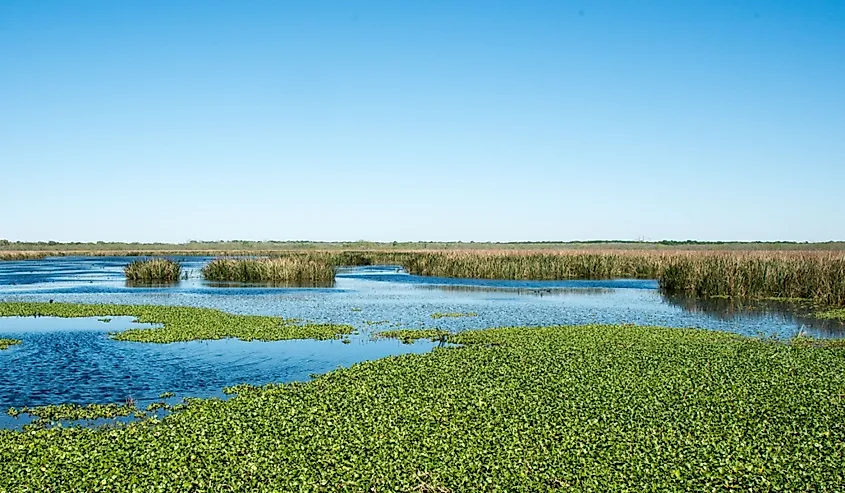
The U.S. Gulf Coast, which stretches from the Mexican border to the southern tip of Florida, features some of the highest rattlesnake populations in the southeastern corner of the country. Vast and vibrant wetlands, swamps, dam islands, forests, and deltaic areas are primarily preferred areas for eastern diamondback and timber rattlesnakes.
Changes in elevation, flood cycles, and prey density further shape the distribution of snakes in this primarily subtropical environment, creating predictable areas for anyone looking to catch a glimpse of these venomous, cold-blooded predators. This article focuses on five locations on the Gulf Coast with consistently high rattlesnake populations and examines the habitat characteristics and behaviors that contribute to rattlesnake abundance.
Brazos Bend State Park, Texas
Brazos Bend State Park, along the North Texas coast, stands out as a very reliable destination if you want to encounter rattlesnakes. Located just outside of Houston’s busy streets, this 5,000-acre park is a stunningly wild mix of lowland forests, wetlands, and open grasslands, creating an ideal habitat for the western rattlesnake, the dominant species here. The western diamondback typically grows 3 to 5 feet (0.9 to 1.5 m) long and is known for its bold white and black tail ring. These snakes are frequently observed along banks, off trails, and near rodent-rich grasslands, especially in the warm mornings and late evenings. Although much less common, gray rattlesnakes have also been recorded in wooded areas.
Brazos Bend has high prey densities with large numbers of rats, mice, and small rabbits, further supporting stable predator populations including birds of prey, rattlesnakes, alligators, and more. Seasonal flooding also typically pushes snakes and their prey to higher ground, increasing visibility along trails. Despite steady foot traffic from the nearby Houston metropolitan area, protections make this one of the most reliable locations on the Gulf Coast for overall wildlife activity.
Big Cypress National Preserve, Florida

Deep in south Florida, Big Cypress National Preserve is home to one of the highest concentrations of rattlesnakes on the East Coast. Covering more than 720,000 acres, it forms one of the largest protected wetland ecosystems in the southeastern United States. This vast preserve includes vast expanses of cypress swamps, pine forests, and wet grasslands and is prime habitat for the eastern diamondback rattlesnake, the largest species in North America.
The average adult length is 3.5 to 5.5 feet (1.1 to 1.7 m), but some species have been known to exceed 7 feet (2.1 m). These snakes prefer high, dry ground within wetland systems and often appear along sand trails, firebreaks, and road edges. For food, pig frogs, swamp rabbits, and cotton rats are local favorites and provide a steady supply of prey.

Drive-in typically increases during the dry season, when lower water levels concentrate both prey and predators in a small area. This allows rattle rats to come down from their preferred high-altitude zones. Big cypresses also frequently overlap with other large reptiles, such as the American crocodile, forming dense and competitive ecosystems.
Mobile, Alabama Tensaw Delta

Alabama’s Mobile Tensaw Delta forms one of the most biologically dense areas in the entire Deep South, and rattlesnakes play a large role there. Covering approximately 260,000 acres, this region is sometimes referred to as the “Alabama Amazon” due to its biodiversity and dense wetland network. This vast network of rivers, bayous, and wetlands primarily supports eastern brown rattlesnakes, especially along natural levees and along slightly raised forest edges above flood zones.
Unlike other open bodies of water, visibility is limited here, and resident snakes tend to remain hidden in the area’s thick understory and debris-lined banks. Small mammals, wading bird colonies, and seasonal fish die-offs also create a stable and diverse food supply within this system. Access routes such as boat launches, logging areas, and raised roadbeds serve as the main zones where people meet. In many wetlands, fluctuating water levels regularly force wildlife into narrow strips of dry ground, increasing the likelihood of incidental sightings in dense areas.
Atchafalaya Basin, Louisiana

Back west in Louisiana, the Atchafalaya Basin is home to a healthy but often overlooked population of rattlesnakes. As the largest wetland system in the United States, spanning more than 1 million acres, it provides vast habitat for rattlesnakes, especially along natural levees, forested ridges, and banks that remain above seasonal flooding. Similar to Big Cypress, these high bands concentrate the snake and its prey in a small area. Prey species here typically include swamp rabbits, nutria, and large rodents.

Rattlesnakes here are more commonly encountered near the edges of the basin, where access roads and oil infrastructure create a variety of natural and man-made migration corridors. Common rattlesnakes are typically 3 to 5 feet (0.9 to 1.5 m) long and range in color from gray to yellow with dark horizontal stripes. Prolonged heat and humidity also extend the active period into the night in the Atchafalaya, increasing human-snake encounter rates, especially for hunters and anglers who stay in the park after sunset. Additionally, although much of the basin is difficult to access, sightings also occur regularly in areas near boat launches and flyovers.
Gulf Islands National Seashore, Mississippi

The Gulf Islands National Seashore, a major part of the Mississippi chain of barrier islands, has a slightly different species of rattlesnake habitat than inland. The preserve spans approximately 260 miles of coastline and barrier islands between Mississippi and Florida. On large islands, eastern diamondback rattlesnakes occupy dry marine forests, shrublands, and dune systems rather than wetlands. These snakes are large-bodied, easily identified by their bold diamond patterns and large, well-developed rattles, and often blend into sandy and grassy coastal terrain. They use local palm thickets and driftwood piles as hiding places, often staying close to slightly elevated ground above the high tide zone.
For food, rodents and ground-nesting birds provide a stable food source, especially during the nesting season. Additionally, limited fresh water forces wildlife into predictable pockets. This is an area that is best avoided without careful awareness. Human access within the park is quite restricted, especially when compared to mainland locations. This has helped maintain a stable population of not only snakes, but also the diverse flora and fauna that call the island home.
Watch out for rattlesnakes in the sunny wilderness
Rattlesnake populations along the Gulf Coast thrive where wetlands, forests, and a variety of other wild landscapes intersect with abundant food sources and long dry seasons. Each of the hotspots mentioned above reflects unique habitat conditions that concentrate many different snakes, ranging from swamps and delta banks to coastal forests. Understanding these patterns highlights both the ecological role of rattlesnakes in this southern region of the United States and the areas where humans are most likely to encounter them.
#Rattlesnake #Areas #Gulf #Coast