A pampered penguin at the zoo escapes the elements and fishes to his heart’s content, but his carefree lifestyle comes at a price.
Newly published research suggests that penguins in zoos age faster than penguins in the wild, biologically speaking, providing a valuable analogy for humans’ Western lifestyles.
“A 15-year-old penguin in a zoo has the body of a 20-year-old penguin in the wild,” explains study co-author Céline Le Bohec, a scientist at the Monaco Science Center who has been studying wild king penguins for more than 20 years.
“But what’s interesting is that penguins in zoos also live longer overall.”
Penguins at the zoo are protected from predators, Antarctic storms and the harsh southern seas. They also benefit from free fishy treats and veterinary care.
However, the researchers suggest that their free diet and limited physical activity contribute to disrupted rhythms such as circadian cycles and sleep patterns, which may affect cellular homeostasis and ultimately accelerate aging. This is a common feature of Western lifestyles.
The researchers say that “the effects of a sedentary lifestyle are difficult to study in humans,” which may seem ironic since there are so many human examples.
But perhaps that’s the point. Human aging is a complex challenge, involving an overwhelming number of factors, including food security, alcohol consumption, economic factors, medication habits, and other variables.
So why not learn about king penguins (Koteites patagonicus)? Penguins are a good example because their socio-economic living conditions have remained unchanged for centuries.
Additionally, they have a lifespan of up to 40 years, making them extremely long-lived animals, especially in terms of their body size. Finally, increased food intake and decreased activity levels in zoo penguins are consistent with similar changes in humans in modern times.
In a recently published study, an international research team led by the University of Helsinki in Finland analyzed biological aging in king penguins using blood samples taken from 64 individuals of known chronological age.
This includes 34 wild penguins from Possession Island in the Southern Ocean and 30 penguins born and raised in Zurich Zoo, Switzerland, and Loro Park Zoo, Tenerife, Spain.
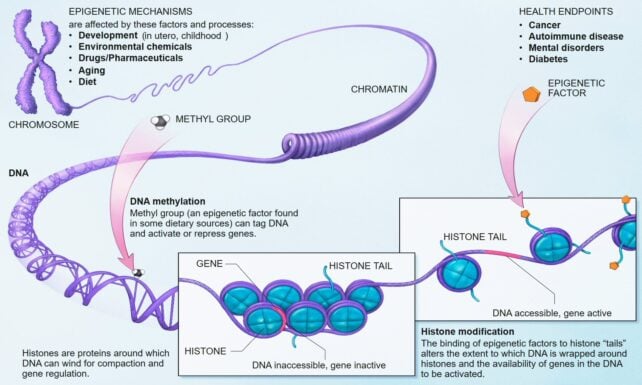
The researchers determined the penguins’ epigenetic age acceleration (EAA) using a biochemical assay that measures the epigenetic clock, DNA methylation, the process by which methyl groups (a carbon atom attached to three hydrogen atoms) bind to DNA.
This is a common test in the field of epigenetics, which studies how environment and behavior affect gene expression without actually changing the sequences within the genes. As a result, a person’s biological age may differ from their chronological age.
A new study suggests there is a discrepancy between the chronological age and biological age of pampered zoo penguins.

In the wild, king penguins can perform amazing feats of physical strength, such as fasting for up to eight weeks and foraging trips of up to 1,200 kilometers (750 miles) while enduring the swells of the Southern Ocean.
However, in zoos, a lack of environmental complexity, psychosocial stress, and changes in the microbial environment can also affect penguin epigenetics, altering the expression of genes related to nutrient uptake, growth, cell death, heart health, and physical activity. These epigenetic changes influence pathways that are also associated with human aging and lifestyle.
Therefore, to further test the model, the researchers compared the model to a human test dataset with similar characteristics using known EAAs. For the aging contrast, the researchers used one of the most powerful aging promoters known: smoking.
This comparison with humans suggests that the penguin aging model is robust.
Related: Adding sugar to your diet may speed up your body’s biological aging process
Additionally, the researchers conducted a survival analysis of approximately 1,900 wild penguins and more than 300 zoo residents. The analysis revealed that the median survival age of penguins in the wild is 13.5 years, compared to about 21 years for penguins in zoos.
Unfortunately, some of these penguins’ free-feeding days are numbered, as researchers are currently conducting studies to encourage penguins in captivity to exercise more and eat less.
The global anti-aging, interspecies implications may be obvious, but they are inconvenient. More careful eating and exercise habits may be essential to extending the lifespan of humans as well as our feathered flightless friends.
This research nature communications.
#Disturbing #patterns #emerge #zoo #penguins #unlimited #food