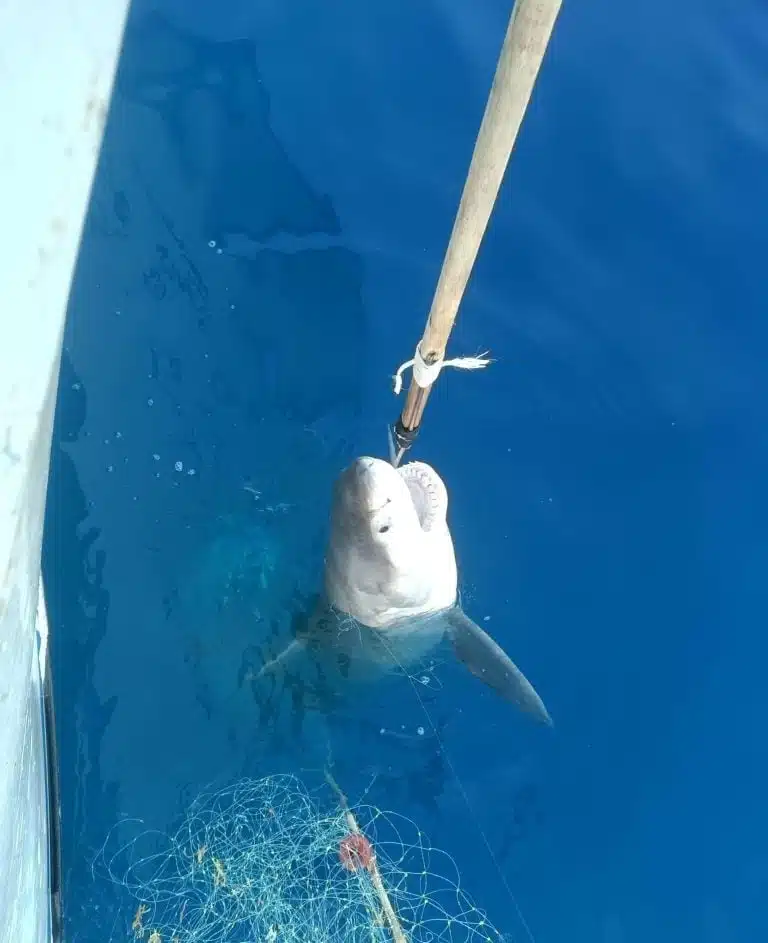
a Great white shark juvenile Captured in the Mediterranean Sea, this population reignited long-term scientific research into a population many thought extinct. This unusual encounter recorded off the coast of Spain is forcing researchers to take another look. Over 160 years of evidence.
The specimen is about 210cm and Weight is between 80kg and 90kgwas caught by a local fisherman on April 20, 2023. Sightings in this part of the Mediterranean remain rare, making each verified record particularly valuable to scientists tracking this species.
To understand whether this event was isolated or part of a broader pattern, researchers turned to historical documents. By compiling records going back in time, 19th centurythey aimed to find out whether great white sharks still maintain a presence in these waters.
A hidden existence revealed by a long history
The research team collected sightings and capture records dating back to 1862 to create a detailed chronology of the species in the Spanish Mediterranean. According to the survey results published in Journal of Ichthyology and Fisheriesthe data reveals a consistent, albeit irregular, pattern.
Rather than disappearing, this species appears to persist at very low detection levels. Scientists call this “Ghost population” A group that continues to exist but is rarely observed. The gaps in sightings, sometimes lasting several years, have led to the idea that the species is locally extinct.
These irregular records reflect both the difficulty of monitoring marine predators and the widespread behavior of marine predators. carcharodon carcharius. Although the Mediterranean shows no signs of population density, accumulating evidence supports its persistence over time.
Scientists talk about this tiny clue
The age of the captured shark is of particular interest. As a boy, it provides clues beyond mere existence. According to the lead researcher Dr. Jose Carlos BáezTo understand, it is important to identify young individuals. Species status in the region.
“Identifying the presence of adolescents is particularly important,” says Dr. José Carlos Báez, the study’s principal investigator. “The occurrence of juvenile individuals raises the question of whether active breeding is occurring in this area.”
The researchers added that this possibility casts doubt on the idea that the area serves only as a transit corridor. Confirmation of breeding activity, even on a limited scale, would reshape our current understanding of how great white sharks use these waters.
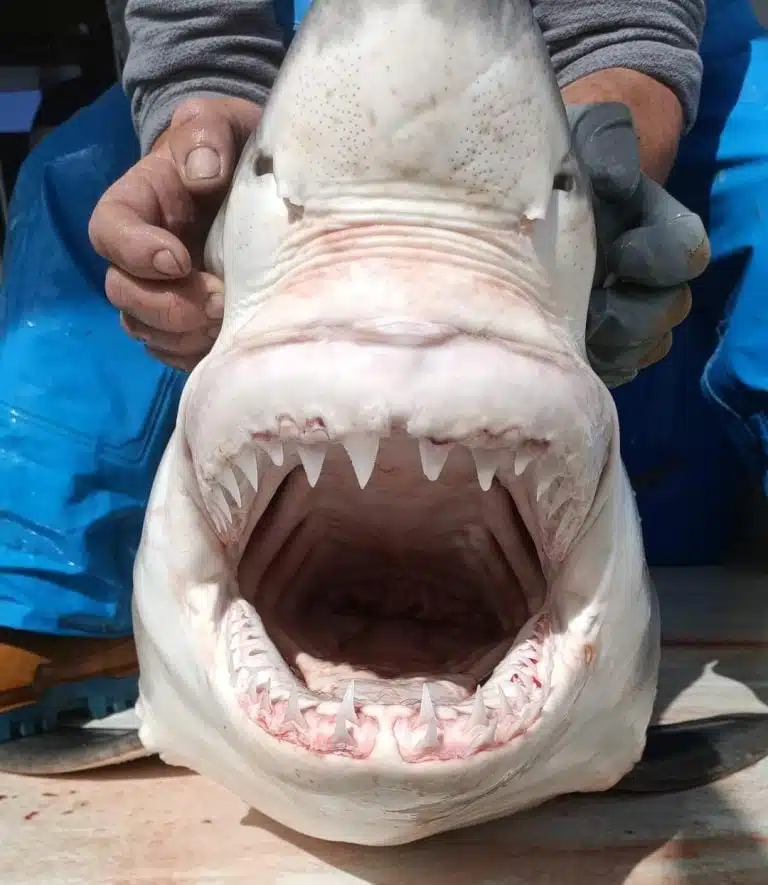
The terrifying Predator or the essential Ocean Guardian?
Public perception of great white sharks often leans heavily toward fear formed by rare but widely reported incidents. However, the historical record analyzed in the study suggests that encounters in Spanish Mediterranean waters are exceptional rather than frequent.
“The main idea I want to convey to the public is that these large marine animals play a fundamental role in marine ecosystems. As highly migratory pelagic species, they redistribute energy and nutrients over long distances.” Baez “They act as natural scavengers, keeping ecosystems clean by eating carrion. When they die, they descend to the ocean floor, providing vital nutrients to deep-sea communities.”
is listed as vulnerable in IUCN Red Listthis species is facing ongoing global decline. Researchers explain that it is important to observe and track them over long periods of time to understand their behavior and protect them.
“By shedding light on the biology and ecology of great white sharks, the study helps replace baseless myths with true understanding,” he said.
#Scientists #capture #meter #long #great #white #shark #Mediterranean #reviving #160yearold #scientific #puzzle