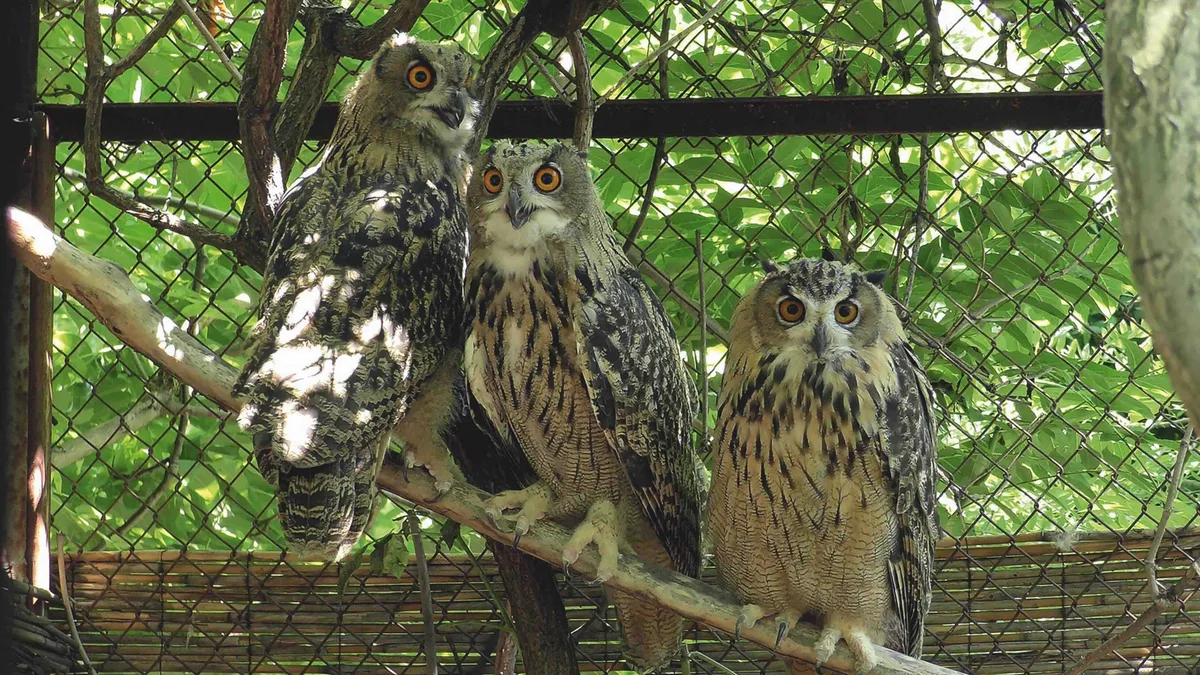
After spending two weeks acclimatizing in a special enclosure near Birkove, a town on the Ukrainian edge of the Danube Delta, it was time for the four eagle owls to leave the nest.
The birds were curious about the open door, but only after the roof of the aviary was carefully rolled back by Rewild Ukraine team members did the birds begin to move.
They jumped up and perched on the perimeter of the shelter, surveying their new surroundings with large golden eyes. Then, just a few minutes later, wanderlust got the better of the first owl, who spread its giant wings and flew into a nearby tree.
It was greeted by a cacophony of cries from confused crows already in the branches, unsure of what to make of this giant intruder.
Within an hour, the four owls joined 15 other owls previously reintroduced to Europe’s largest remaining wetland. The program began in 2019 with one “Pioneer Owl” and four more owls have been released over the past six years.
Rewilding the Danube Delta
Four weeks ago, I was driving east along the Romanian side of the waterway from the town of Tulcea with Ioana Catalina Petrenc, who leads Rewilding Romania’s Danube Delta team.
Due to the ongoing conflict, it was not possible to meet with our Rewild Ukraine colleagues, but there were reports of a eagle owl sighting at Ultima Frontier, a lodge near the Ukrainian border.
This was our destination, and the team planned to search for the elusive owl, as well as conduct land assessments and monitor waterfowl, particularly the Dalmatian pelican.
The delta is a vast mosaic of rivers, lakes, and swamps, where fresh water mixes with tidal currents from the Black Sea to form brackish lakes.
There are also vast areas of grasslands, steppes and forests, as well as continuously shifting sand dunes, and the old lighthouse of Sulina is now 6 km from the coast.
Herons, herons and kingfishers can be seen patrolling the waterways, and white-tailed eagles can be seen keeping watch in the treetops and telephone poles. Black storks circle above the thermals, and squadrons of pelicans flutter in dark V shapes across the delta’s wide skies.
Occasionally a golden jackal would appear on the riverbank, watching us suspiciously as we passed by.
A small fishing boat drifts by, submerging its fishing rod in the water to look for carp. Carp is one of more than 60 species of fish, including four species of sturgeon, making the delta home to the most diverse fish species in Europe.
A side channel connects the main channel to the lake. There, pelicans and pygmy cormorants perch on slowly decaying tree stumps, and hundreds of swallows skim the water and splash with midge beaks.
Some of the lakes are still covered with the triangular leaves of water chestnuts, a staple food for people living in the delta. Some areas are covered with water lilies, providing convenient nesting sites for coots and terns in spring.
Finally the delta throws us into the main Danube. Ukraine faced us on the other side, and we solemnly passed a partially submerged gunboat that had been hit by drones and sunk.
“This is still a very natural place,” Petrenc says, listening to the sound of an outboard motor revving. “The ecosystem is pretty complete and there is still a lot of diversity left.”
“Rewilding is based on letting nature take its course,” she continues. “Don’t intervene unless something is missing.”
The great eagle owl is one of the extinct species in the delta, and has been reintroduced in Ukraine with a very specific role: controlling the proliferation of rats that threaten the eggs and chicks of ground-nesting birds such as plovers and staghorns.
Restoration of the delta, including breeding and releasing eagle owls, is being funded by a $2.4 million grant from the Endangered Landscapes and Seascapes (ELSP) Initiative. This six-year project is one of more than 20 across Europe supporting the restoration of ecological processes and reintroduction of species.
The latest animals released into the Delta (two males and two females) were born at the Limpopo Zoo near Lviv.
After the hatched birds grew up in an environment as close to natural as possible, they were transferred to the Odesa Zoo, where they learned to fly and hunt. The last two weeks in captivity were spent getting used to the smells and sounds of the wild.
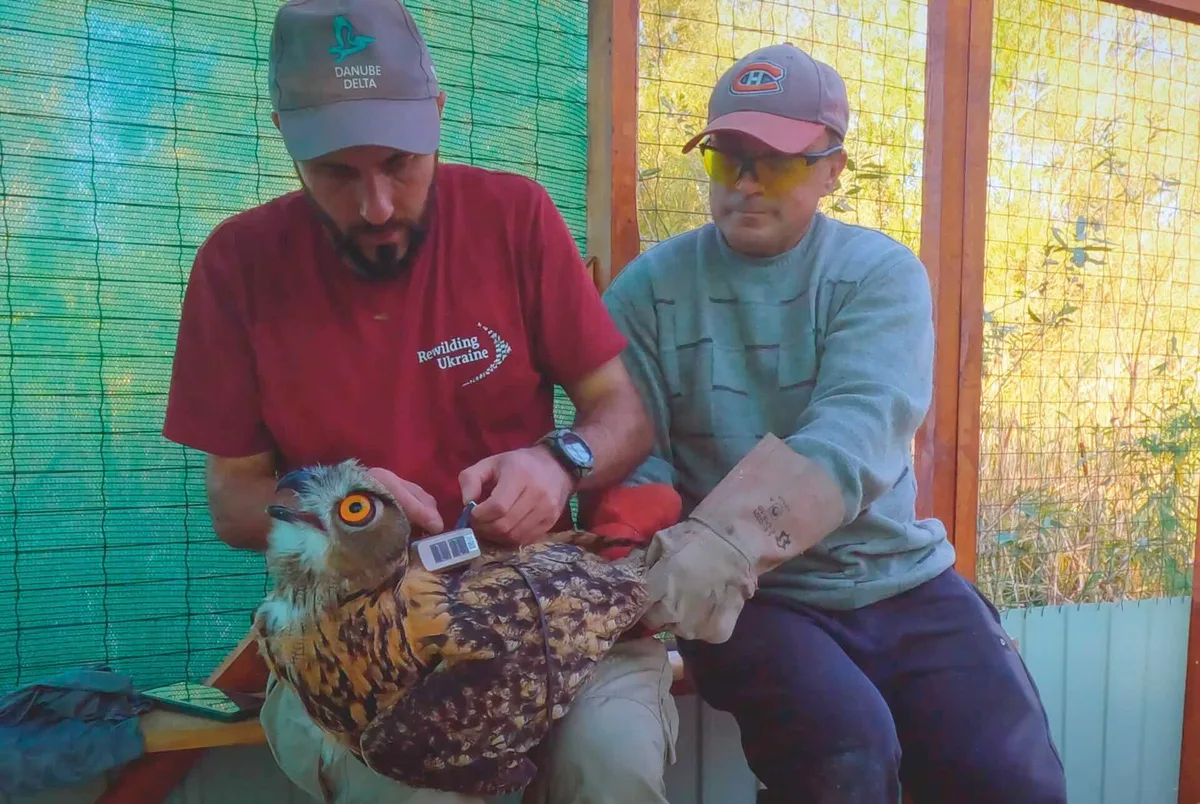
This process, called hacking, is a common method of preparing birds of prey for release, explains Mykhailo Nesterenko, team leader at Rewilding Ukraine.
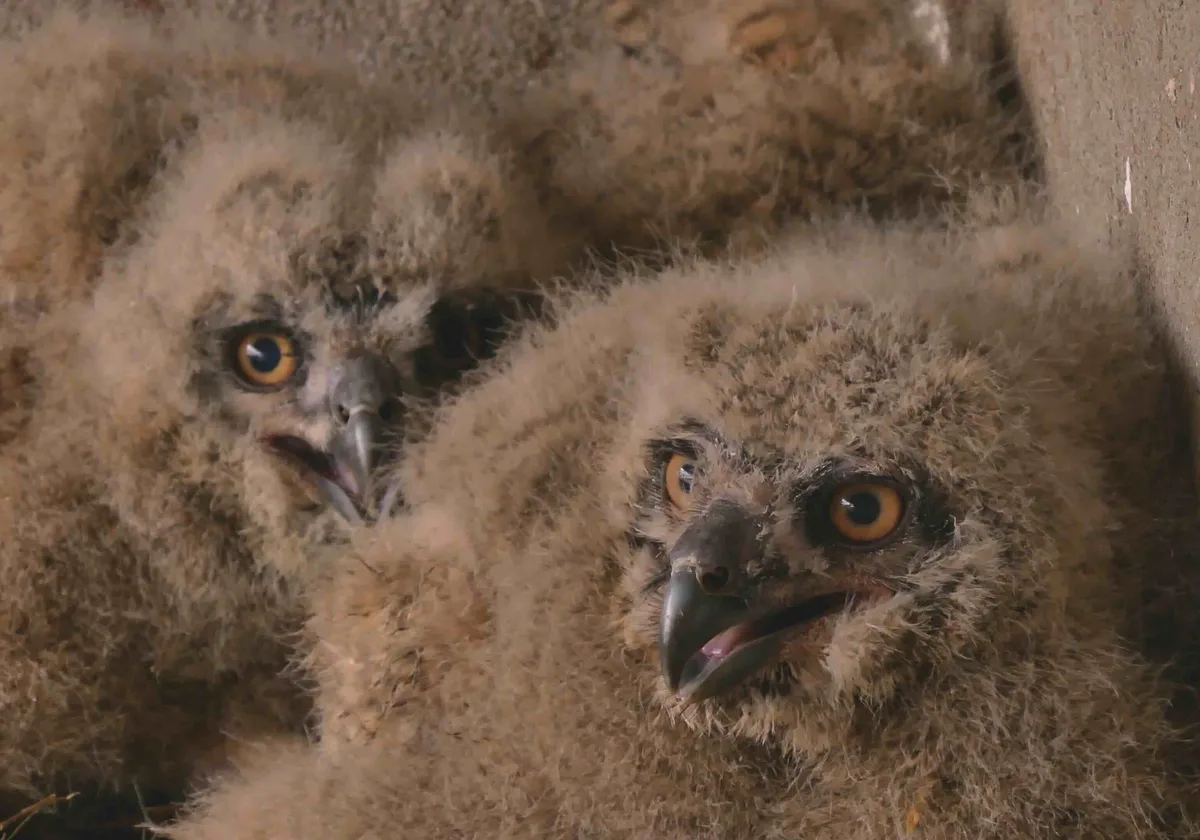
“We want the animals to believe that they were born here,” he says.
At least two owls from each release were fitted with transmitters, and some were found to have explored the entire Danube, but ended up returning to the Ukrainian side of the delta.
Return of the apex predator
Eurasian eagle owl (bubo bubo) is the largest in Europe, with a height of 75 cm and a wingspan of up to 180 cm. Known as pulmicones, they are apex predators with prominent ear tufts and loud calls, and a true preference for rodents.
The owl used to be found throughout Ukraine, but is now restricted to a few regions in northern and eastern Ukraine.
“Like other raptors, the great eagle owl was persecuted in the past,” Nesterenko said. The eradication program ended in 1969, marking a turning point in legal protection for the species. Hunting is now completely prohibited.
Collisions with power lines also cause damage, but this has been significantly reduced by installing bird diverters that make cables easier to see. The use of poisons to kill the rats that feed on owls was also restricted.
The definitive book on this species, simply called eagle owlwritten by Vincenzo Penteliani and Maria del Mar Delgado.
Delgado explains that eagle owls lack a sense of adventure, and once they leave the nest, they “don’t disperse, they don’t explore.”
As a result, we cannot rely on nature to reintegrate people into the area and require human intervention. However, reintroductions need to be carefully managed. “Eagle owls can prey on almost anything…they are superpredators.”
One reason for persecution of eagle owls in the delta is their preference for domestic cats; eagle owls are also known to prey on larger birds such as herons, and carcasses of peregrine falcons have been found in their nests.
But such events are rare and only occur when no other prey is available, Delgado said.
Great eagle owls are crepuscular, hunting when light begins to wane, patrolling three to four areas near their roost. Their diet ranges from hedgehogs to amphibians to large insects, and birds are similarly selective about where they nest.
They often occupy the nests of other birds such as storks, buzzards and eagles, and prefer high cliffs and quarries, but will also nest between stones on the ground or at the base of overturned trees.
Unlike many owls, they avoid tree holes. “They’re so big that they have to jump off the nest to start flying,” Delgado says.
Delta restoration
Reintroducing eagle owls is just one effort to restore and rewild these wetlands. This delta region developed over the millennia after the Danube River entered the Black Sea, turning its flooded estuaries into giant lakes such as Kartal and Yalpu.
Since then, people have been tampering with the water flow in this landscape.
Perhaps the most dramatic change came after World War II, when people faced hunger, food shortages and a new era of communist rule, Nesterenko explains.
Vast areas of the delta fell under the plow, and levees, drainage ditches, and polders channeled water to fish farms and irrigation facilities. These efforts to tame rivers have led to decreased water quality, salinization, and loss of biodiversity.
Throughout the communist era, Petrenc explains, there was a constant push for development. Conservation was first mentioned in the 1990s.
“People said something about the destruction, but they were silent,” she explains. “Right now we are feeling the effects of what happened in the past.”
The collapse of the Soviet Union brought further changes. Government subsidies were lost, inefficient industries collapsed, and agriculture declined.
The land was no longer managed and the reeds were able to gain a foothold. The delta provided the perfect conditions for this ferocious plant to thrive, establishing itself on the edges of meadows and abandoned fields and slowing the natural flow of water.
Dry reeds can also act as tinder for wildfires.
Large herbivores play an important role in combating reed explosions, and with support from ELSP, several species have been reintroduced to Yermakov Island, part of the Ukrainian delta.
These include the courant, a wild donkey that has been extinct in Europe for more than 200 years. Connick’s horse. And there are both red and fallow deer, all of which prefer the young shoots of reeds.
But the real stars are the buffalo, who trample reeds as they eat and are true landscape architects, creating new glades and ponds. The animals currently in the area are related to the 15 animals published in 2019, but the buffalo here date back to when it was part of the Ottoman Empire.
Restoration work also includes reopening waterways and waterways and removing human-made restrictions such as aging dams and levees to restore natural floods and flows.
Some of the communities living in the delta are some of the most remote in Europe, and it’s important that rewilding benefits them, too, Nesterenko said.
“We are restoring the natural connectivity and natural dynamics of the delta,” he says. This not only helps prevent flooding, but also expands spawning areas for fish and improves water quality. Ecotourism also offers new opportunities.
“It’s a great dream to turn the delta back into a wetland,” Petrenc added. “Our goal is not to fence everything off. People need to benefit from nature in a responsible way.”
Despite our best efforts, we do not see or hear any eagle owls at the lodge. But one night I woke up to a distant roar, and when I looked across the Danube in the morning I saw smoke rising from Vircove.
It’s hard to understand how a country that has been at war for nearly four years has devoted so much time and attention to four owls.
However, nature has always played a central role in the life of Ukrainians. Even in the midst of the turmoil of war, the country is planning to establish two new national parks.
Further annual releases of owls are planned as part of a long-term reintroduction program.
Nesterenko’s dream is to find evidence that the owls are breeding, confirming that the apex predator is indeed back, and that its deep, resounding call will once again become a common sound across the Delta.
Mark Hillsdon visited the Danube Delta courtesy of Endangered Landscapes & Seascapes.
Image above: An eagle owl flies through a forest in the Czech Republic. Credit: Jan Drahukopil/Getty Images
#woke #rumbling #sound #looked #Danube #smoke #rising #predators #reclaiming #home #middle #war #zone #discover #wild #animals