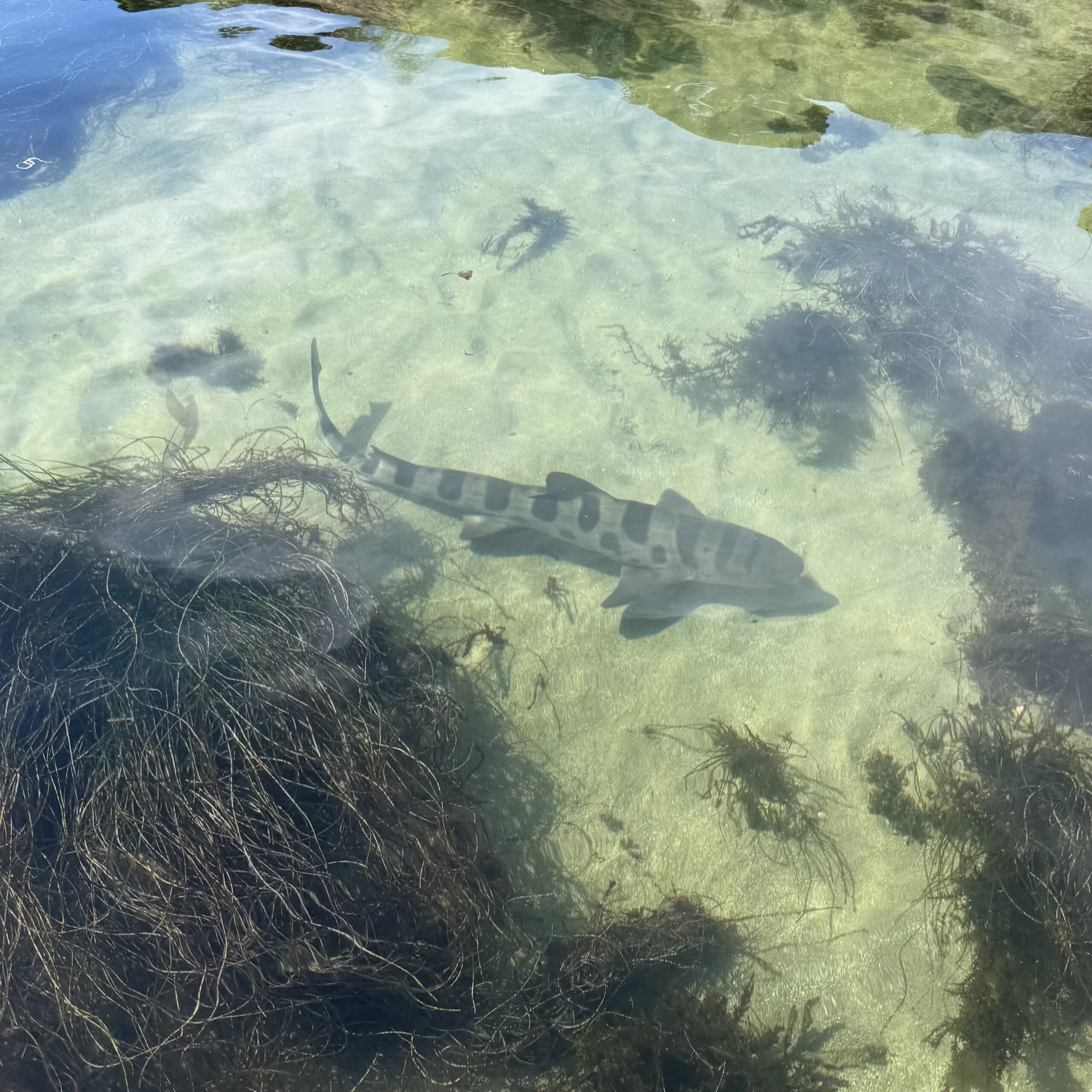
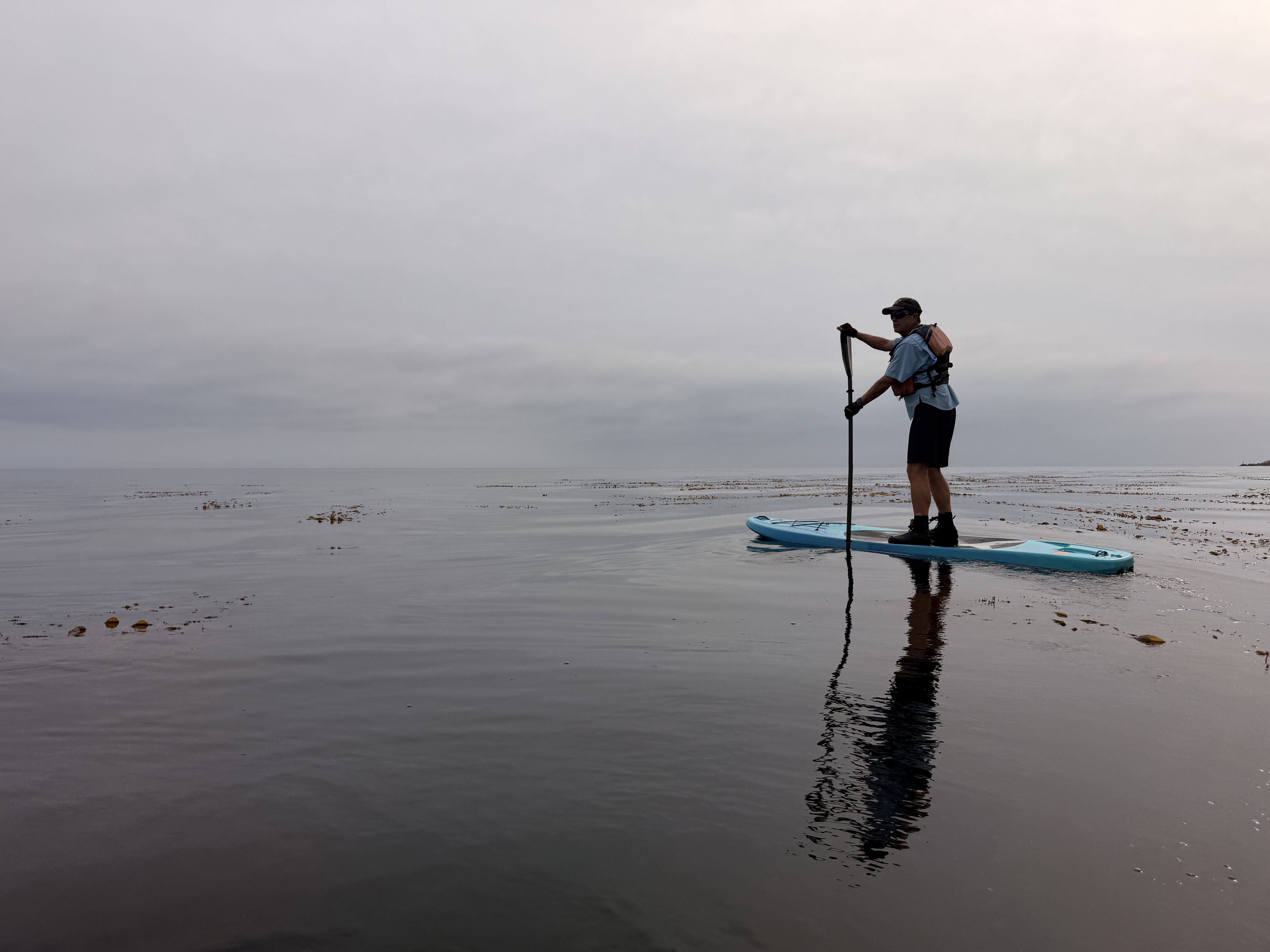
The sea is glassy calm and sharks swim below us.
And one more thing.
My 11-year-old daughter, in the kayak just in front of me, screamed in a mixture of fear and surprise as she watched the spotted fish roam below us, its tail clicking in the greenish shallows.
After all, this is what we came for. “Leopard Shark Nursery” in Palos Verdes.
I have lived in the South Bay for 22 years. I’ve never lost sight of its natural wonders (especially as someone from the East Coast). But somehow I missed this.
And so has Bob Merchant, founder of Palos Verdes Ocean Sports, for many years.
A lifelong ocean lover and surfer, the 56-year-old former software engineer first discovered a leopard shark farm while leading a kayak tour on the rocky shores of the South Bay.
“I’ve been leading tours for a while, going into the reef and exploring,” Merchant said. He took over the small ocean sports facility at Terranea Resort in 2020 and plans to open a second ocean sports company in San Pedro this summer. “One day I saw a bunch of baby leopard sharks. I went the next day and saw a few more. And the next day I saw a few more.”
Merchant spent months roaming the area, figuring out the best times to visit, when the tides are high, and where the rocks would surprise novice paddlers. Last year, we started offering nursery school tours.
“It took several years to figure out the timing to navigate that area safely and know when the sharks would be there,” he says. “Often I couldn’t see anything when I went inside.”
-
A young leopard shark swims in the shallow waters off Palos Verdes, south of Terranea Resort. (Photo provided by: PV Ocean Sports)
1 of 4
A young leopard shark swims in the shallow waters off Palos Verdes, south of Terranea Resort. (Photo provided by: PV Ocean Sports)
expand
However, now is the peak season. Leopard sharks are native to this area, and spring is especially active in offshore waters.
“This is a great time to be out at sea,” said Amanda Stovall, interpretive coordinator at the Aquarium of the Pacific, citing three seasonal marine phenomena: the gray whale migration (northward migration runs from December to April), the upcoming Grunion migration, and the baby boom in leopard shark nurseries.
The entire Palos Verdes coastline serves as a nursery for a variety of marine life, she added.
“It’s a very productive environment with lots of upwelling, and the kelp forests provide really clean habitat for a lot of animals,” she said.
Leopard sharks, a shiny, spotted fish named for the black saddle-like spots along its back, are common along the Pacific Coast from Oregon to Baja California, but are particularly abundant in the warm, shallow bays of Southern California, she said.
Typically 4 to 5 feet long, they are considered harmless to humans and are benthic animals that feed on crabs, earthworms, and small fish. Each spring and summer, large flocks of females gather in protected coastal waters (such as the coves off Palos Verdes), drawn by warmer temperatures that promote the development of young females.
These areas are also relatively safe from large predators, creating ideal breeding grounds for sharks to give birth to live pups, often just a foot long, before swimming back into the deep ocean.
Merchant said she sees something different every time she goes out to sea.
“Part of the fun is being there with people experiencing it for the first time,” he said. “I love taking people who have never seen a tide pool or been in the ocean and showing them something really cool.”
Starting from Terranea Cove, a rocky shore surrounded by steep coastal cliffs, Merchant leads daily leopard shark tours, as well as tidal pool tours, paddleboarding, and fishing tours. He partners with Terranea to handle the bulk of the reservations and splits the $185 per person admission fee with the resort.
He said he is the only company offering guided kayak tours of the surrounding waters and the only marine tour operator with permission from the city of Palos Verdes to take kayakers to the tide pools at Sacred Cove, an inlet within the Avalon Cove coastline that will be closed to the public starting in 2024 due to the Portugal Bend landslide.
The decline in visitors has allowed life to inhabit the rocky coastline and foster a rich marine ecosystem within the rocky mountains.
“Before, people would come and scavenge creatures from the tide pools that they shouldn’t have ingested,” he says. “But now they’re amazing. They’re exquisite.”
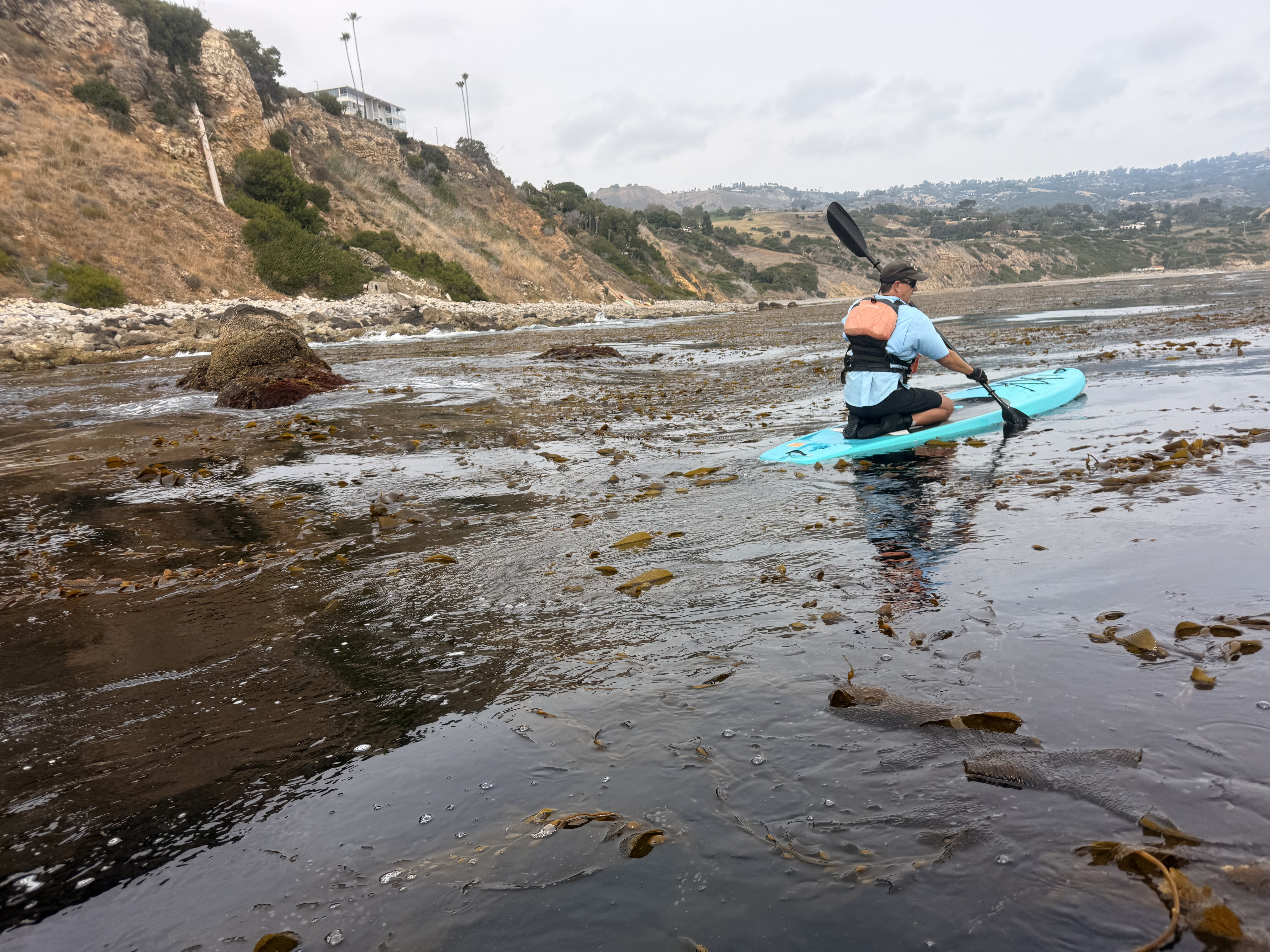
Gliding through a dense kelp forest feels like skimming the surface of another world. Huge stalks of kelp are anchored to the ocean floor, and their leaves float on the water’s surface, creating a choppy green canopy.
Paddling through the water feels like dipping a ladle into a thick stew.
It is in the open areas that sharks can be seen swimming low along the ocean floor. “They are the sweepers of the ocean,” Merchant said, constantly scavenging shallow waters in search of food.
Leopard sharks can grow up to 8 feet long. However, here they are mostly juveniles, and sometimes adult females (we found one over 6 feet long).
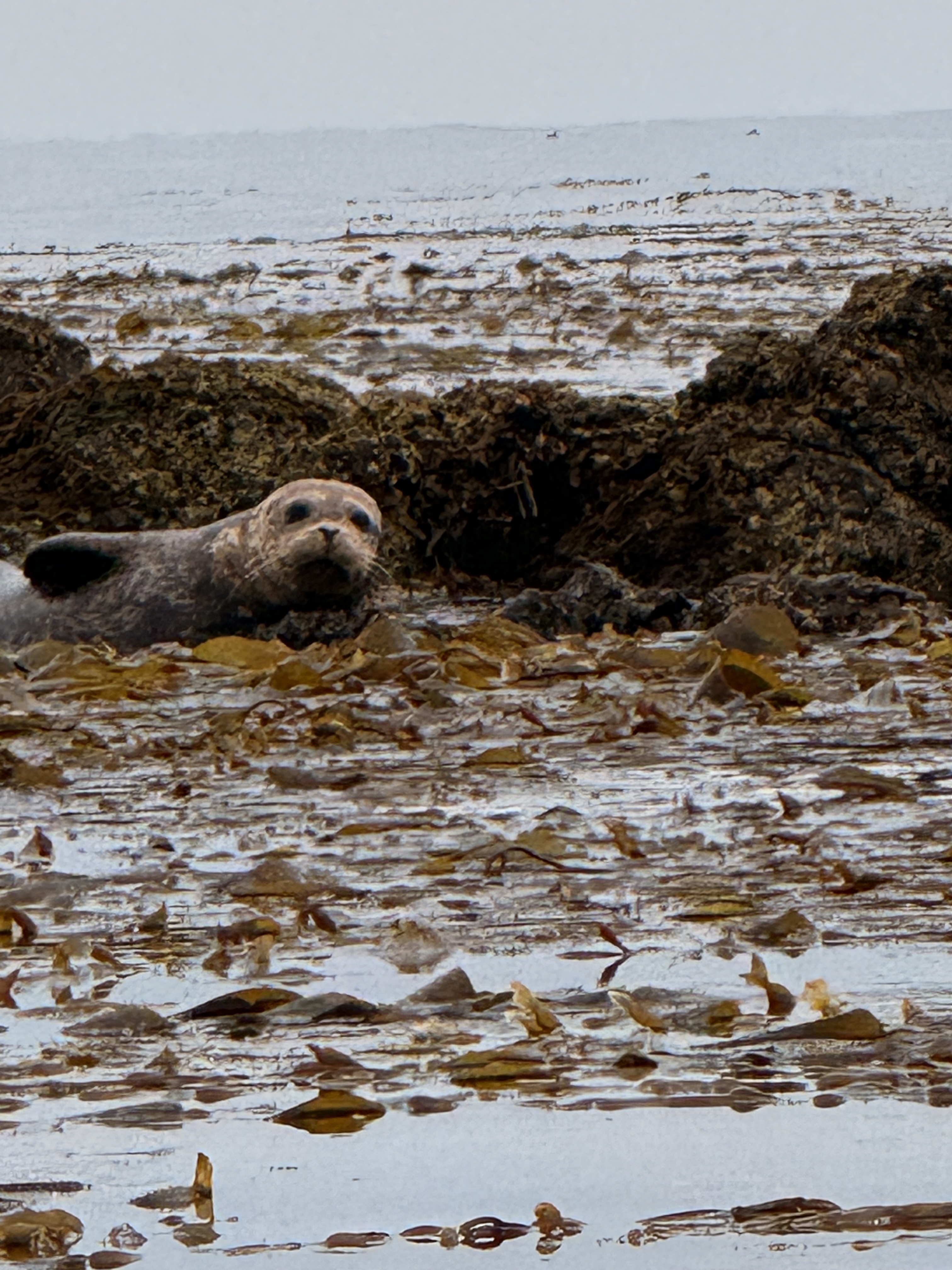
During our 90-minute paddle, we also saw stingrays, schools of fish, and an adorable family of harbor seals lounging on the rock wall that protects their nursery from the currents.
Merchant said it’s also common to see dolphins and whales cruising around the kayaks.
“Once you see dolphins up close and swim under a boat, you won’t want to take visiting friends and family to places like Griffith Observatory, Venice Beach or the Chinese Theater, where you’ll find a great playground just steps from your front door,” he said.
Grunion Run
Of course, leopard sharks aren’t the only special springtime fun at our beloved coastal playground. It is also the beginning of grunion season.
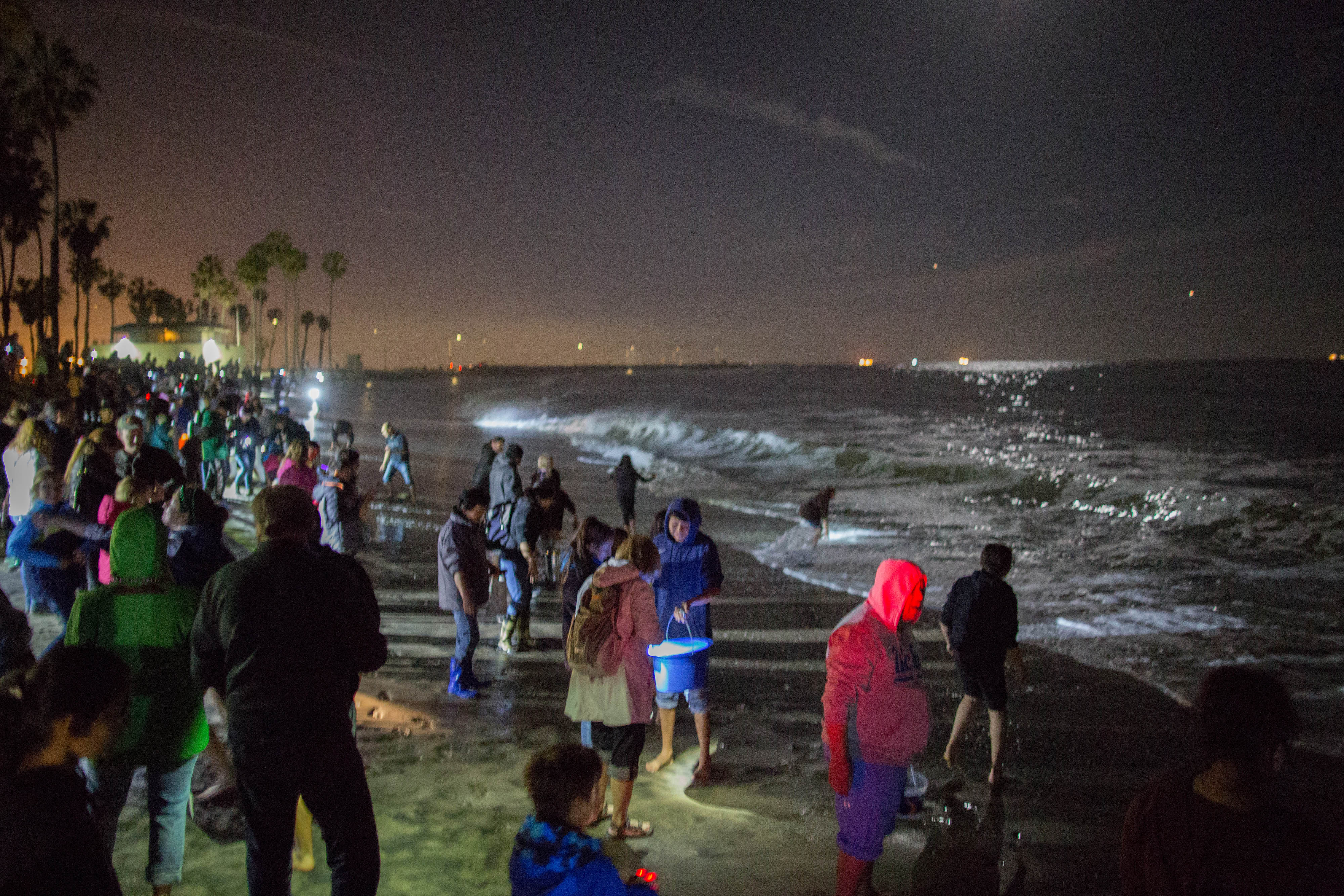
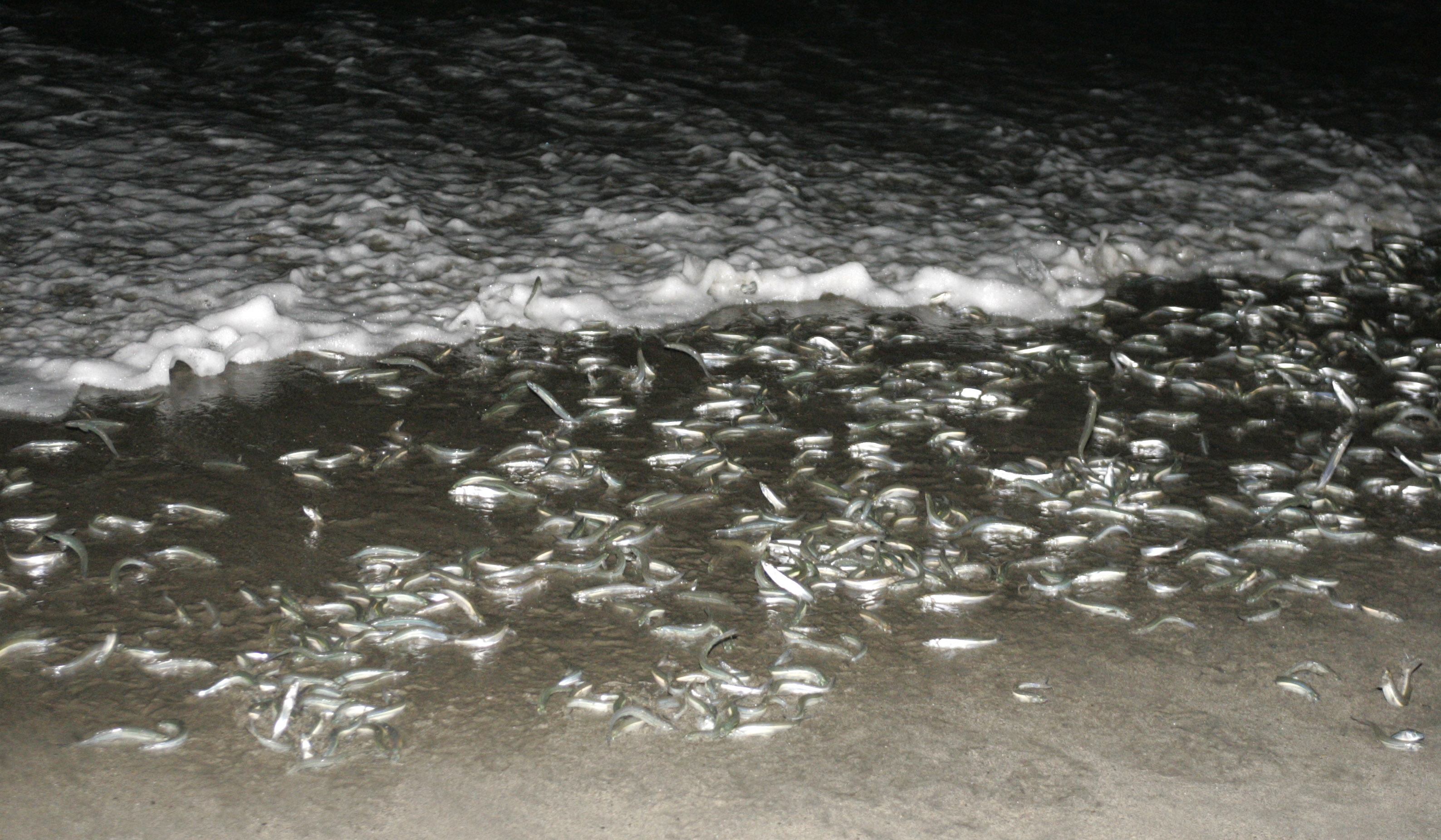
For those unfamiliar, the annual “Grunion Run” is a natural phenomenon in which thousands of small silvery fish land on Southern California beaches at night to spawn. At high tides after full moons and new moons, the fish ride the waves onto the beach, where the females bury their eggs and the males fertilize them.
If you go outside on a good night, you’ll see fish bobbing on the sand as far as the eye can see.
-
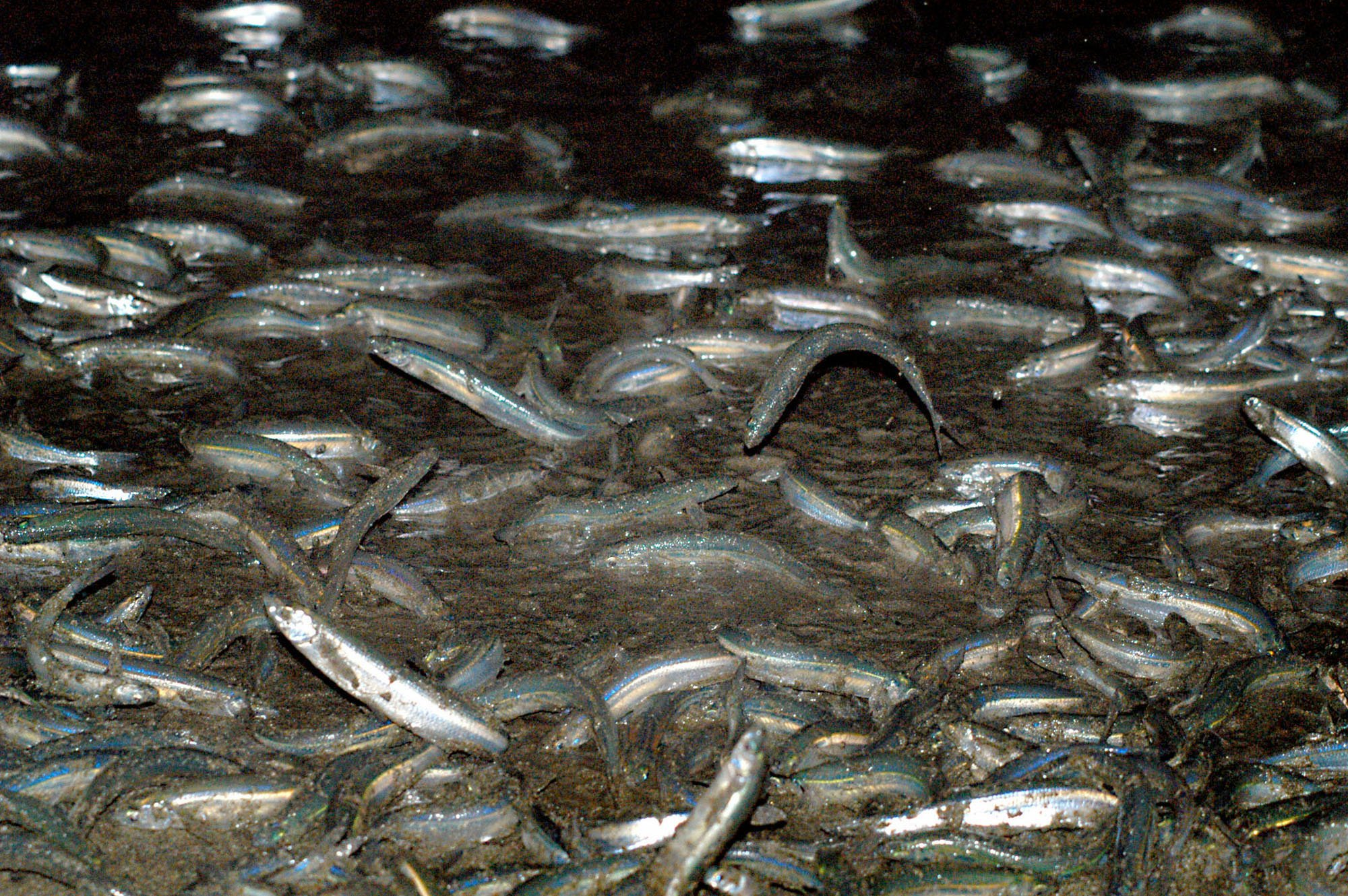
Grunion season opens this week with the first run scheduled for Tuesday 10th March 2024, giving you the chance to see the rare sight of fish spawning along the shoreline. (AP Photo/Cabrillo Marine Aquarium, Gary Florin)
1 of 3
Grunion season opens this week with the first run scheduled for Tuesday 10th March 2024, giving you the chance to see the rare sight of fish spawning along the shoreline. (AP Photo/Cabrillo Marine Aquarium, Gary Florin)
expand
“Essentially, they wait until high tide, so the female can burrow herself into the ground and use her tail to dig up the sand and then deposit her eggs,” Stovall said.
“It looks really weird because it’s a fish sticking straight out of the beach,” she continued. “The male comes and wiggles in a circle and wiggles around the female and fertilizes the eggs.”
The event takes place from March to August each year, with peak activity typically occurring from April to June.
While you can go to any beach to see the fish, Stovall recommends attending sponsored events such as the “Meet The Grunion” event at Cabrillo Aquarium.
“Cabrillo has a very good record of knowing when these fish are going to show up and where they are, so that would give us more certainty,” Stovall said. “There are no guarantees when you walk up or down the beach. You might see something, you might not.”
Gray whale migration
If that wasn’t enough, Southern California is still a great spot to watch gray whales on their northward migration.
From December to April, gray whales spend the winter mating and giving birth in the warm waters off the Baja Peninsula before migrating north to Alaska, where they often huddle along shorelines to protect their young from deep-sea predators.
April is one of the last chances to find calves locally, and mothers and calves often travel together.
-
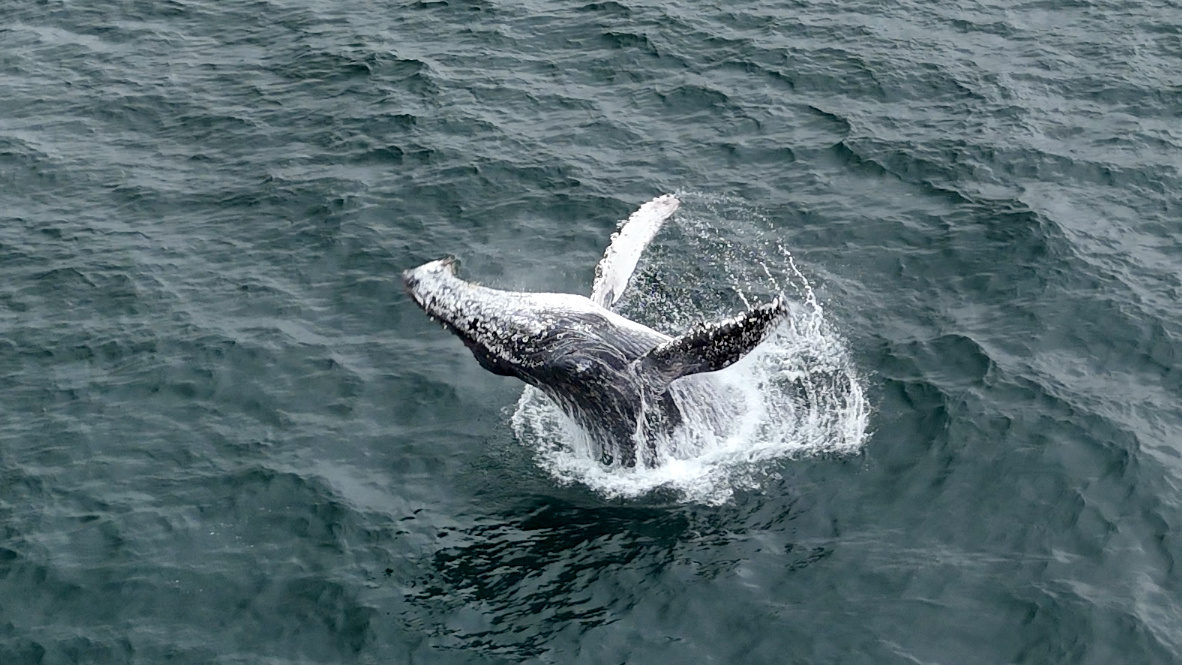
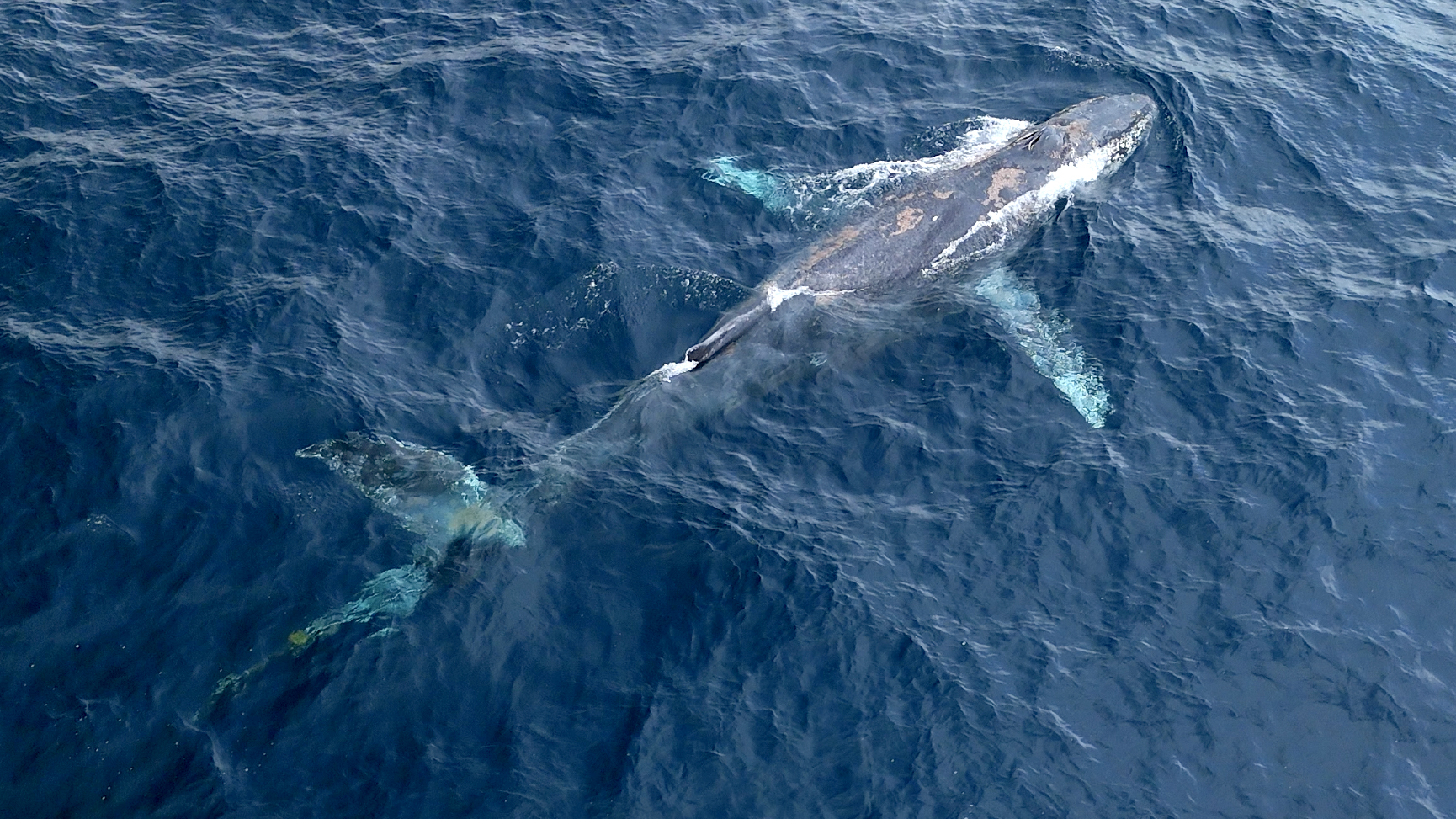
A young humpback whale was discovered off the coast of Rancho Palos Verdes on Saturday, July 13th. The whale was entangled in a rope wrapped around its tail and partially struck by one of its flukes. I also used a buoy or float to drag a 10-foot line. (Video obtained by Mauricio Tassara/IG @empty_drone)
1 of 2
A young humpback whale was discovered off the coast of Rancho Palos Verdes on Saturday, July 13th. The whale was entangled in a rope wrapped around its tail and partially struck by one of its flukes. I also used a buoy or float to drag a 10-foot line. (Video obtained by Mauricio Tassara/IG @empty_drone)
expand
“This is actually the best time to look for whales, because mother whales and calves stay in the lagoon for a long time.”
Next up is the blue whale migration season, which usually begins in May. Blue whales, the largest animals ever to live on Earth, migrate north to feed on krill in the nutrient-rich waters off Southern California.
“There’s something amazing about seeing an animal like a whale come so close to you,” she said. “There are a lot of people in the world who have never seen a whale. They’ll never be able to get on a whale-watching boat. And now you’re joining this small group of people who can see the largest creature on Earth. There’s something exciting about that.”
learn more:
For more information about the Palos Verdes Ocean Sports Leopard Shark Tour, visit www.beachcoveretreats.com/ocean-sports or check out our Instagram page instagram.com/palosverdesoceansports.
To book a whale watching tour from Long Beach, visit 2seewhales.com.
To obtain tickets to Cabrillo Aquarium’s “Meet the Grunion” event, visit cma.recreation.parks.lacity.gov ([Public Programs]). The California Department of Fish and Wildlife maintains a calendar of predicted Grunion Run dates and times at wildlife.ca.gov/Fishing/Ocean/Grunion.
#Shallow #Water #Sharks #Discover #Palos #Verdes #Hidden #Leopard #Shark #Farm