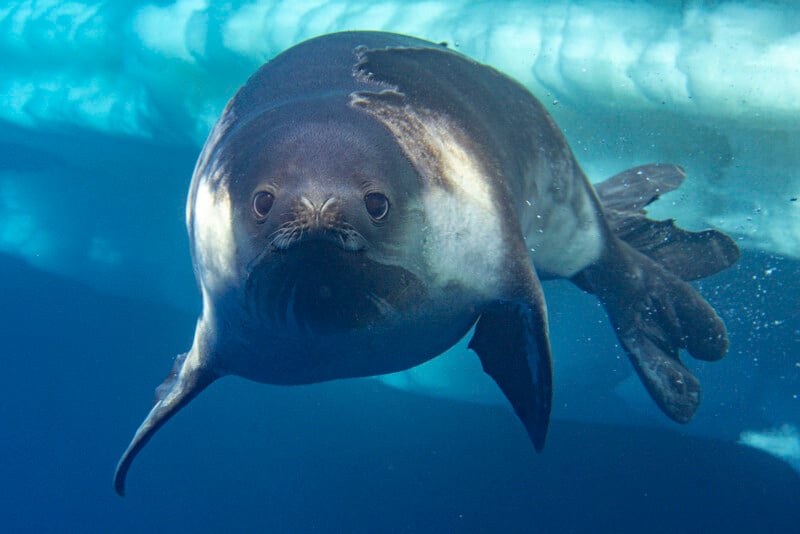
A photographer has captured the first ever photo of a rare and adorable Ross seal swimming in the icy waters of Antarctica.
Justin Hoffman has spent 16 seasons diving from expedition vessels as part of his role as an undersea specialist. During that time, the photographer had only seen one Ross seal.
Ross seals live deep within Antarctic ice floes, and relatively little is known about them because the species never leaves the Southern Ocean.
But for the summer of 2025, the expedition ship Hoffman is working on could venture much further south than usual. “We weren’t expecting to find a Ross seal,” Hoffman said. petapixel. “The captain saw an opportunity to sail the ship far south, which happened to be a great spot for Ross seals.”
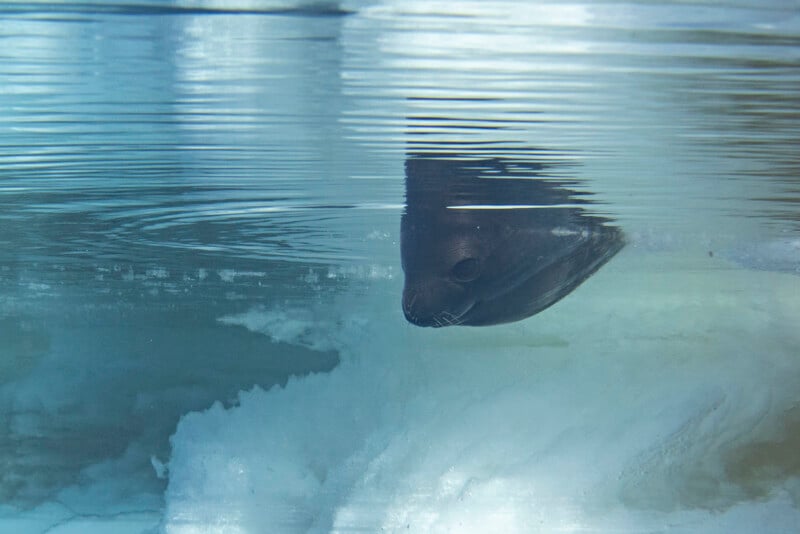
Hoffman said a few years ago, he noticed that Ross seals had never been photographed underwater before and realized he had a chance to take the first photo. But that was never his main objective. Rather, Wouldn’t it be great if we could take the first underwater photo of this animal?
Rising global temperatures presented Hoffman with an opportunity this winter. “We originally went out with the intention of photographing krill along the edge of the ice,” he explains. “So I fitted the Nauticam EMWL 130 wet-mount lens, which transforms a 90mm macro lens into an extreme macro wide-angle lens. It’s a wild lens that allows you to focus right down to the glass of your subject while still giving you a 130-degree field of view.”
Hoffman noted that he had expected to photograph crustaceans, and said this was “completely the wrong underwater setup for photographing seals.” But fate had other plans. While he was in the water, a Ross seal that had been sleeping on the ice began to sprint towards the edge of the ice.
“One of my colleagues alerted me that a seal was coming toward us, so we sat patiently in the water,” Hoffman said.
“The water temperature was 30 degrees Fahrenheit (-1 degree Celsius). My options were a 90 mm macro lens or a wide-angle lens with close focus, neither of which anyone would consider a setup for photographing Ross seals.”
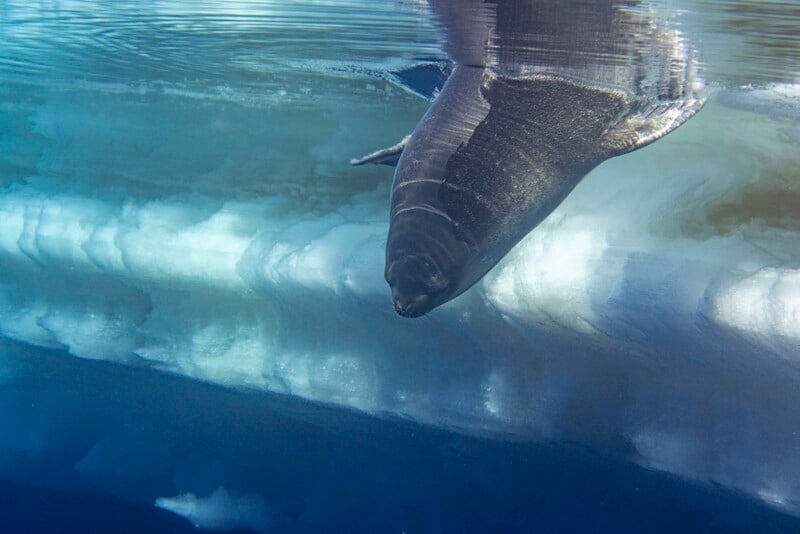
Luckily, the setup turned out to be great. Summer plankton had not yet appeared and the water was crystal clear. When the Ross seal entered the water, Hoffman and his diving partner stood back and stayed still so as not to disturb the marine mammal. The 90mm lens and the crystal clear water complemented each other beautifully.
“Typically, when shooting underwater, you always try to limit the amount of water between the camera and the subject, because water absorbs light and contains particulate matter, which reduces contrast,” explains Hoffman.
“The second lucky thing was that the sun was out. I knew this was a very special encounter, so I decided not to use an underwater strobe. I’m very careful not to disturb the animals while I’m photographing them, but I didn’t know if the seals would react to the strobes. I decided it was a waste and turned off the strobe when the seal entered the water.”
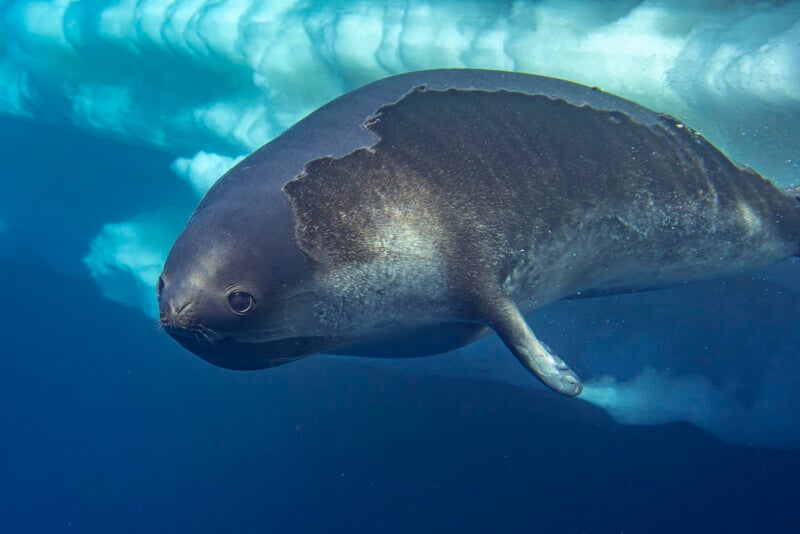
The bright sunlight overcame Hoffman’s wish to use a strobe light, and he was able to take beautiful, natural photos of the cute Ross Seal.
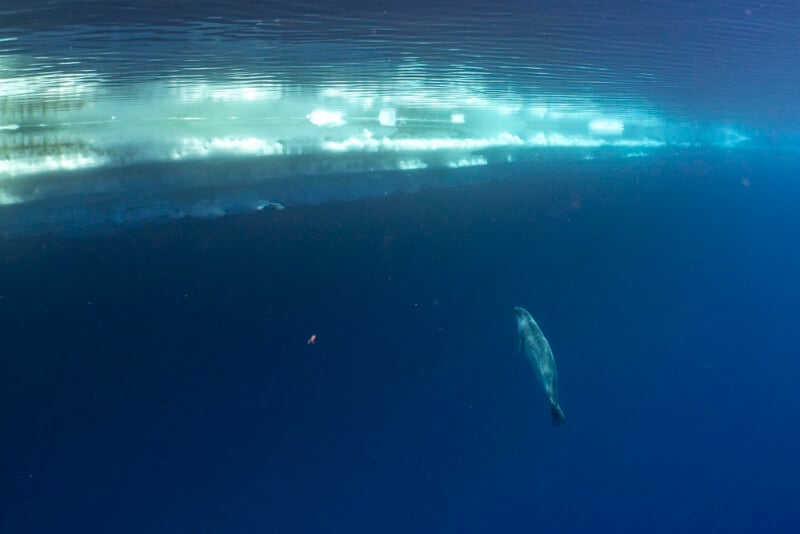
“The Ross seal hung out along the ice edge for about four minutes in total, diving shallowly and eventually disappearing beneath the ice,” he added.
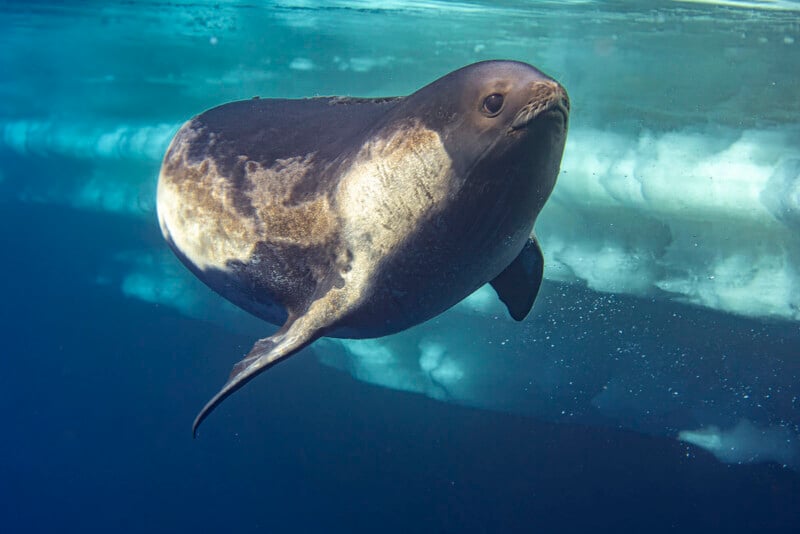
Part of Hoffman’s job is to take photos underwater and give presentations to guests on board about what he sees.
“Honestly, this is the best job in the world because I get to travel all over the world, dive in really wild places, and teach tourists about what’s going on underwater in the places they visit,” he says.
“Most of the places I work are in cold water regions like Greenland, Alaska and Antarctica, so my guests are always amazed by the vibrant marine ecosystems of these places.”
That means Hoffman isn’t always focused on maximizing his shots. Diving at a particular location may only be attempted once, so you need to be economical.
“Expedition diving is some of the most challenging diving in the world, and when you throw a camera into it it becomes even more difficult,” he says.
“The main purpose of my job is to educate, so I don’t actually have to be a good marksman to teach my guests what’s going on underwater. I just do it for my own satisfaction.”
“There are very few opportunities for me to make art or actually create a scene,” he continues. “Unless it’s something completely unique like Ross Seal, you can’t just take one good photo and go home from a dive. You have to cover the scene and give guests a sense of what it’s like to dive in Antarctica.”
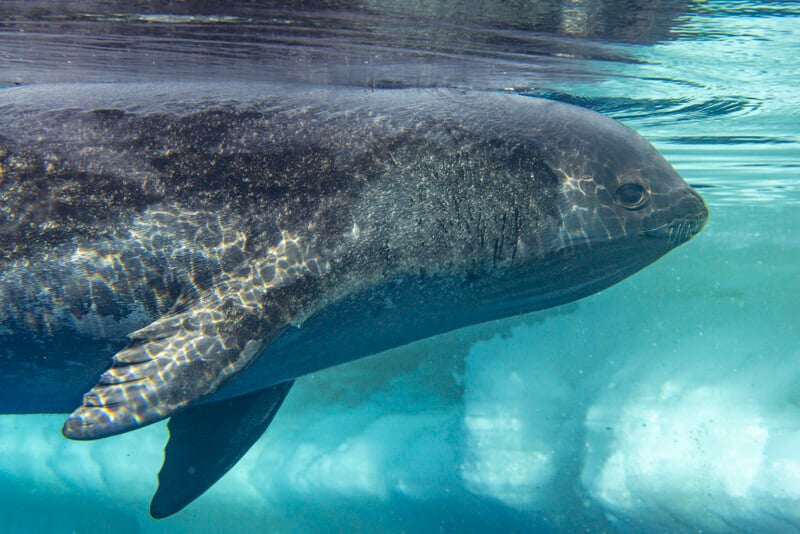
But as Hoffman says, the Ross seal is something very special. “Every time I see his face, I smile,” he says. “For the first few days, I just watched him. He is the perfect ambassador for his species and for the importance of the Antarctic ecosystem on a global scale.”
Hoffman hopes his photos will encourage people to “go down the rabbit hole” and learn not just about seals, but about the entire Antarctic ecosystem in which they live.
“Personally, this encounter and the resulting photographs bring me great joy, because they are the culmination of decades of wildlife observation,” the photographer reflects.
“Fifteen years ago, if I couldn’t hold back, I might have failed, and I might not have even gone into the water that day because there wasn’t much to photograph.
“But these days, I always take advantage of the opportunity to go into the water, because sometimes you get a huge surprise and you can see things that no one else has ever seen.”
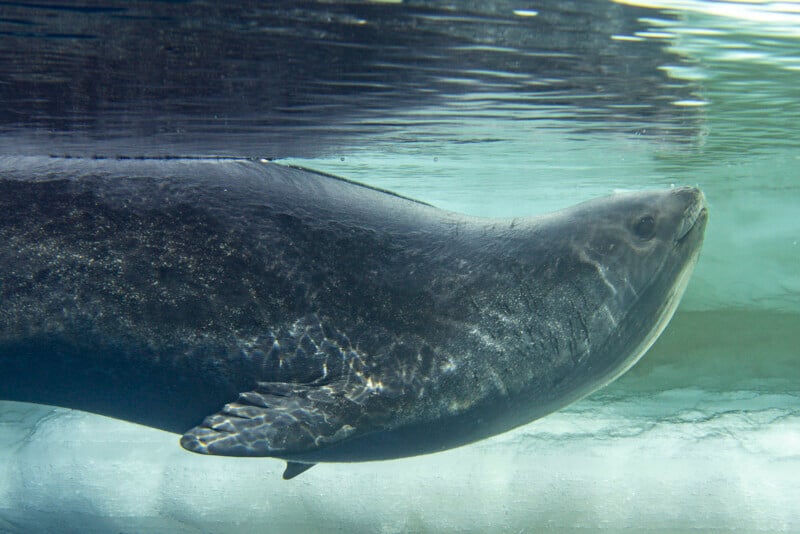
Hoffman is thrilled to be able to swim with and photograph Ross seals, but he also knows that it was the planet’s rapid warming and lack of sea ice that provided the opportunity in the first place.
“I continue to experience this kind of ecological sadness as I watch the ecosystems I love degrade year after year,” he says.
“Those are the things that drive me. I feel like I have a duty to these places and these animals to expose them to the public and to bear witness to them.
“So this photo ranks very high on my list of personal accomplishments, because it’s the only photo that I can say without a doubt that we brought something into the world that no one had ever seen before, and it expanded our collective knowledge of our species a little bit more.”
You can see more of Hoffman’s work on his Instagram and website.
Image credits: Photo: Justin Hoffman
#Photographer #takes #photo #adorable #Ross #seal #swimming #Antarctica