Millions of people scroll by to see unexpected bodies – bigger players perform gymnastic feats that leave shredded athletes speechless.
Recently, a popular fitness content creator has taken a deep dive into this phenomenon, investigating how athletes carrying excess body fat achieve strength levels that seem physically impossible.
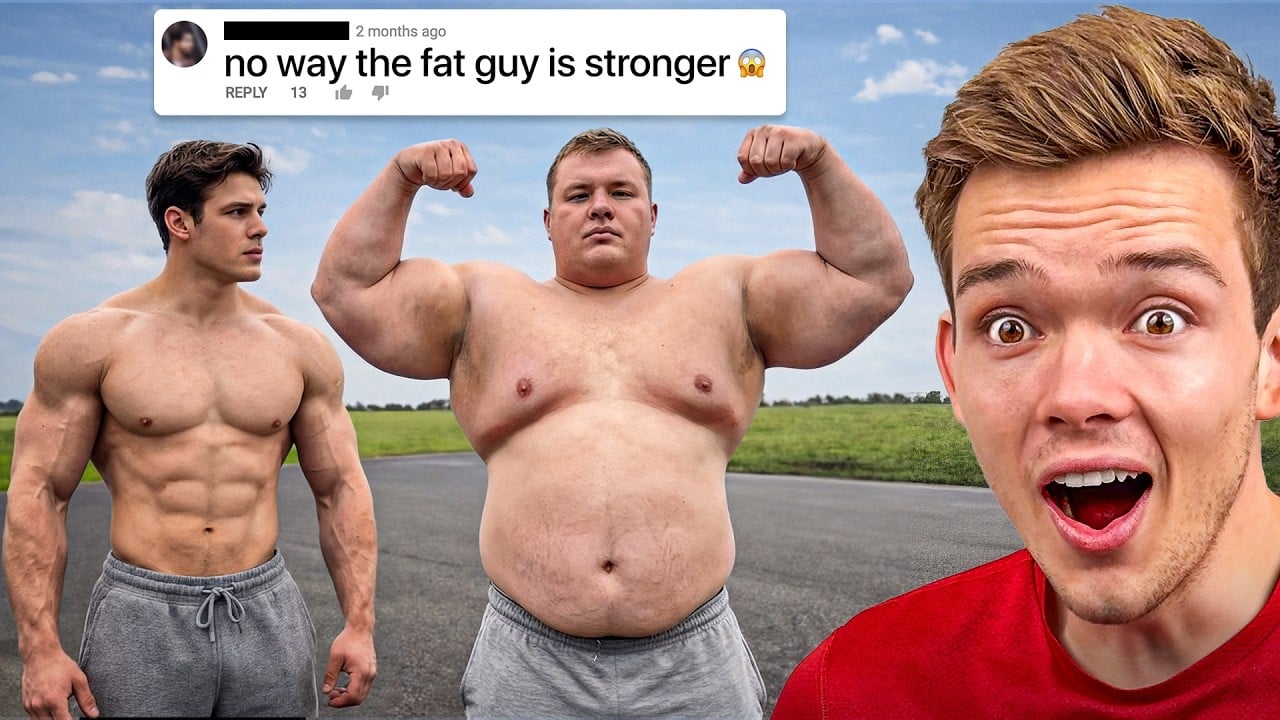
Their findings challenge everything traditional fitness culture teaches about body composition and performance.
What they discovered revealed the hidden science behind strength, which has nothing to do with visible abs.
The Gymnastics Paradox: Why Bigger Bodies Look Impossible
Calisthenics relies entirely on moving your weight through space. Conventional wisdom says that the lighter the better.
Calisthenics is the use of your own body weight as a resistor in strength sports. So think muscle-ups, pull-ups, weighted dips, human flags, and planchets.
Elite gymnasts typically have single-digit body fat percentages. World record holders and champions share strikingly similar physiques, including minimal body fat, maximum muscle definition, and toned legs.
This reasoning makes mechanical sense. That is, every pound should directly contribute to the movement. During skills that require full-body tension and control, extra weight becomes dead weight.
Introducing Kylie Hoss: 300-pound gymnastics anomaly
Weighing over 300 pounds, Kylie Hoss performs movements that most trained athletes cannot accomplish. His videos show variations on the dragon flag, human flag, one-arm push-up, and handstand, and have racked up millions of views.
Perhaps most impressive? The four-finger pull-ups were performed with a control that suggested these movements were easy for him.
I’m 37 years old, an overweight guy who does gymnastics.
His triceps push out layers of body fat during handstand push-ups. The lats create visible definition even under substantial fat tissue. His back muscles rival those of competitive bodybuilders.
Why his weight hasn’t changed
After a full year of calisthenics training, Hoss candidly shared that she wasn’t losing weight.
I’ve been doing gymnastics for over a year, but I haven’t lost much weight. People always ask how that is possible. It’s simple. I eat a lot and don’t move much except for muscle training.
His honesty reveals the important insight that strength training alone does not guarantee fat loss. Daily movement patterns and nutrition determine changes in body composition much more than exercise choices.
The science behind unexpected strength
Strength consists of two main elements that work together. Understanding both shows that physique and performance are not necessarily correlated.
muscle cross-sectional area
When slicing through the thickest part of a muscle, surface area determines the potential to generate maximum force. The larger the cross section, the more force will be generated. This is simple physics.
However, if strength were determined solely by muscle size, bodybuilders would dominate all strength sports. it’s not.
Neural Drive: The hidden game changer
Neural drive describes the body’s ability to optimize movement patterns through brain and muscle coordination. This adaptation develops through deliberate and repeated practice.
Skill work, practicing specific movements hundreds or thousands of times, creates neural pathways that make complex movements feel effortless. The body and brain are not separate entities but function as an integrated system.
Athletes with superior neural drive recruit muscle fibers more efficiently, time better, and perform movements with less wasted energy. This explains why smaller athletes often outperform larger athletes.
Benefits of Leverage: Why Height Matters
A viral athlete weighs 83 kilograms (183 pounds) and looks quite heavy. His compact frame creates mechanical advantages invisible to the casual observer.
Shorter limbs mean less leverage during gymnastic movements. As the length of the arm increases, it becomes exponentially more difficult to keep the arm extended. This is the same principle as the longer the wrench, the less force is required.
There will be minimal resistance when pushing down near the shoulder joint. Extending the same force to the fingertips becomes nearly impossible for most people. Shorter athletes face a leverage disadvantage in all movement patterns.
Former gymnast: The ultimate sleeper athlete
Many incredibly strong and physically fit athletes share one thing in common: a background in gymnastics. Years of childhood training form neural adaptations that persist decades later.
Ash Watson, known as “The Bear,” has shown world-class calisthenics skills despite not having the typical athletic aesthetic. His gait suggests average health until he performs movements that require extraordinary strength-to-body weight ratios.
Pointed toes in action reveal gymnastic training. Its details reveal deeply ingrained movement patterns and exceptional body awareness developed through years of specialized practice.
Muscle memory is more than just a saying
Former gymnasts retain the neural pathways built during their formative training years. Even after gaining significant body fat or taking long periods of rest, the nervous system memorizes complex movement patterns.
Combined with underlying muscle mass hidden beneath adipose tissue, these athletes have the ability to defy visual assessment. What seems impossible becomes commonplace.
hidden muscle elements
If you look closely during a handstand or planch, you’ll notice that the muscles beneath the body fat are greatly developed. The triceps push out the soft tissue. The lats create visible width. The deltoid muscles show clear separation.
Some analyzes suggest that losing 20 to 30 kilograms will result in muscle tissue comparable to that of professional bodybuilders. Back development, arm size, and shoulder width all indicate significant lean body mass.
I think this person has IFBB pro level muscles.
Fat acts as camouflage, hiding muscles that look abnormal when you have a low body fat percentage. These athletes have both important adipose tissue and At the same time, extraordinary muscle mass.
Joint resilience: an overlooked factor
Beyond muscle and nerve drive, joint integrity determines performance capacity. Carrying more than 300 pounds during one-arm handstand push-ups puts extraordinary stress on your wrists, elbows, and shoulders.
Most people of a similar weight will have trouble just hanging from a pull-up bar. Connective tissue (tendons, ligaments, cartilage) must adapt to cope with forces that can damage untrained joints.
This adaptation requires years of gradual loading. Joint elasticity develops more slowly than muscle strength and is therefore a limiting factor in rapid progression.
Can anyone start gymnastics, regardless of body size?
Kylie Hoss claims calisthenics welcomes all body types. His message promotes inclusivity and challenges gatekeeping in the fitness community.
Imagine someone telling you that you can’t do gymnastics because you’re too fat.
However, his abilities represent an extreme outlier rather than a typical result. Even people with similar body fat percentages are unable to perform basic exercises such as dead hangs and assisted pull-ups.
These athletes likely had previous training experience, good genetics, significant muscle mass, or a combination of all three factors. Beginners should not expect similar rapid progress.
Realistic expectations for large beginners
Starting gymnastics at higher weights requires modified progression and patience. Regression exercises safely build your basic strength.
- dead hang Develop grip strength and shoulder stability before attempting pull-ups
- incline push up Reduces load while increasing press strength
- Variations with assistance Create appropriate challenge levels using bands and machines
- isometric hold Gain time in a tense state without making dynamic movements
Combining calisthenics training with increased awareness of daily movement and nutrition creates sustainable progress. Although fat loss is not necessary for muscle strength gains, weight loss facilitates skill gains.
What happens after fat loss?
Athletes who have significant muscle underneath their body fat will experience dramatic strength gains when they perform cuts properly. Maintaining muscle mass while losing fat will dramatically improve your strength-to-weight ratio.
A gradual caloric deficit preserves lean tissue better than an aggressive approach. Adequate protein intake, progressive strength training, and patience will prevent muscle loss during long-term dieting periods.
An athlete who performs handstand push-ups with 300 pounds may double his performance ability with 250 pounds. The base strength is the same, but there is much less mass to move.
genetic lottery
Some people simply have genetics that favor muscle development. Distribution of muscle fiber types, tendon insertion points, limb length, and neurological factors all influence potential performance.
Outliers exist in every domain of motion. These exceptional individuals should not set the standard for typical outcomes.
Recognizing genetic diversity allows us to avoid unrealistic expectations while simultaneously celebrating outstanding achievements. Comparing your personal progress to your personal baseline creates a healthier mindset than chasing abnormal performance.
Important points
Muscle strength is not determined solely by visible abdominal muscles. Nervous activity, muscle mass hidden beneath fatty tissue, leverage, prior training, joint elasticity, and genetics all contribute to performance.
These extraordinary athletes show that body composition and ability don’t always equate visually. However, their achievements are the exception and not the norm that is accessible to most trainees.
Fitness includes many different goals and expressions. Muscle strength, mobility, cardiovascular health, and body composition exist as separate but interconnected qualities. Optimizing one does not automatically improve the others.
Whether you are pursuing aesthetic goals, performance goals, or improved health, your individual situation will determine the appropriate strategy. A method that works for genetic outliers with a gymnastics background may not apply to the general population.
Celebrate good performance while maintaining realistic personal expectations. Progress happens through consistent effort applied intelligently over long periods of time, regardless of starting point or final destination.
#chubby #gymnast #challenges #physics #building #strength #handstands #Secret #abs