Australia is length It’s far from anywhere and has been for a very long time. This landmass was definitively separated from the Gondwana supercontinent about 40 million years ago and has existed in geographical isolation ever since, as a large chunk in the middle of an even larger ocean.
This isolation, combined with diverse habitats and changes in global temperatures, set evolution on a unique trajectory.
Australia now has a high proportion of species found nowhere else. Approximately 85 percent of the continent’s mammals, 93 percent of its reptiles, and 94 percent of its frog species are endemic to the continent.
When separation occurred, there were no land-dwelling placental mammals in Australia, but ancient lineages of marsupials and monotremes (egg-laying mammals) were.
These survived and diversified, leading to the evolution of some 300 species of modern marsupials, including bandicoots and quolls, and two species of Australian monotremes, the platypus and echidna.
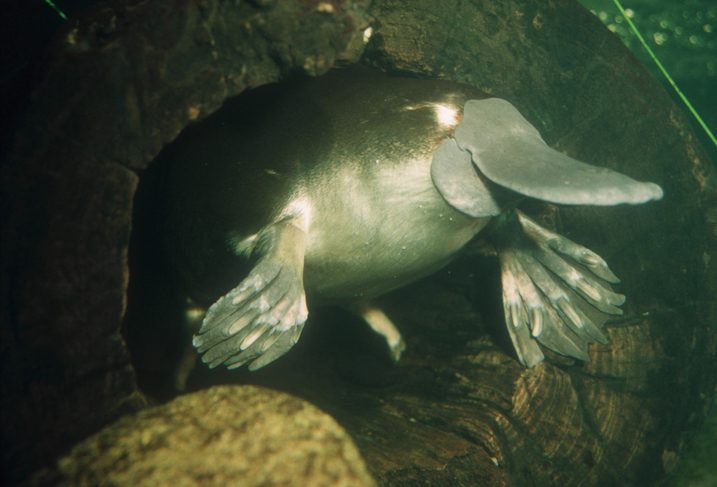
There are many “mysteries” here. For example, a platypus appears to have the beak of a duck, the body of an otter, and the tail of a beaver.
They lay leathery eggs like reptiles, but they leak liquid from special holes in their abdomens that lick into their fur and suckle their young like mammals. Males have venomous spikes on their ankles and their beaks are sensitive to electricity.
The echidna is covered in spikes and can also sense electricity, but it’s its reproductive system that has been in the “weird” spotlight. Males have a characteristic curved, four-headed penis, and females have two separate vaginal openings.
Not to be outdone, some male marsupials, including opossums, have bifurcated penises that pump sperm into both of the female’s two permanent vaginal canals. Females also develop a third, temporary vagina that they use for childbirth.
And don’t forget: marsupials have large pouches. These provide a safe haven for tiny babies who undergo the shortest gestation period and are born in an undeveloped, fetal-like state.
For beginners, all these features may seem strange. But when viewed through the lens of evolution, they make perfect sense.
How do these strange features benefit Australia’s strange animals?
Each “strange” feature represents a solution to the problem of survival, which is related to the animals’ lifestyle and habitat, which in turn is related to their homeland, the Australian continent.
By swimming with their eyes closed and their nostrils closed, the platypus’ electrosensitive cells in its beak allow it to detect electrical signals generated by the muscle movements of its prey.
Glands in the upper thighs of adult males produce venom, which is released through ankle spurs and is used as a weapon when competing with other males for territory and mating rights.
On the other hand, although the echidna’s spines are defensive, the male only uses two of the four heads of his penis at a time, alternating them during each subsequent copulation.
This is thought to help increase the chances of successful fertilization, especially when females mate with multiple males during the breeding season.
The unique reproductive systems of female echidnas have evolved in tandem with those of their suitors, and a similar mechanism has evolved in opossums, but the addition of a third, temporary birthing vagina facilitates the passage of tiny marsupial fetuses from the uterus to the pouch, where they can safely continue their development.
Australia’s animals are truly some of the strangest and most amazing on the planet, and nowhere else can they be compared.
Image above: A platypus swimming among logs. Credit: Martin Harvey/Getty Images
#Weirdness #abounds #creature #appears #beak #duck #body #otter #tail #beaver #Discover #wildlife